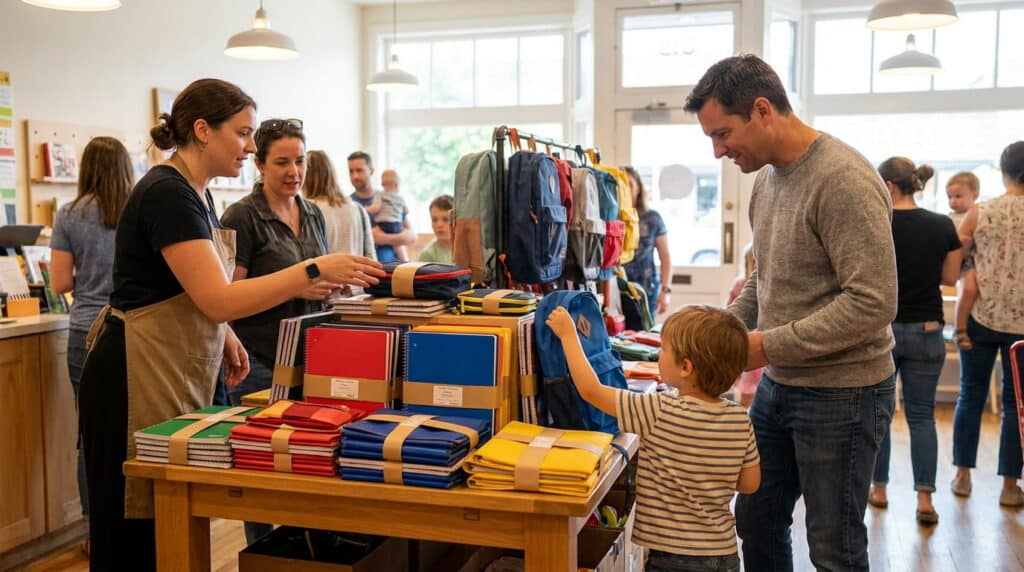
Back-to-school is one of the biggest sales windows of the year — and it isn’t just for office-supply stores. Clothing shops, shoe stores, gift shops, and general retailers all see a real bump as parents and students stock up for the new school year. The retailers who win this season aren’t necessarily the ones with the deepest discounts — they’re the ones who make it easy to buy everything in one trip, show up in the community doing it, and keep shoppers coming back across the full multi-week rush instead of just one weekend.
Key Takeaways
- Back-to-school isn’t just for office-supply stores — clothing, shoe, gift, and general independent retailers all see a real seasonal bump.
- Bundling complementary items into one visible display drives bigger baskets without relying on discounts.
- Local tie-ins (school partnerships, teacher appreciation events) build community goodwill that outlasts the season itself.
- It’s a multi-week window, not a single shopping day — loyalty incentives matter more here than in a one-day sale event.
- Real-time sales data and mobile checkout are what let a retailer act on the rush as it happens, instead of reacting to it afterward.
Table of Contents
- Bundle Promotions That Move Multiple Categories at Once
- Local Community Tie-Ins
- Turning Social Proof Into Foot Traffic
- Loyalty Incentives That Bring Shoppers Back Mid-Season
- Using Real-Time Sales Data to Double Down on What’s Selling
- Making Sure Your Checkout Can Handle the Rush
- Make This Season Count
- requently Asked Questions
Bundle Promotions That Move Multiple Categories at Once
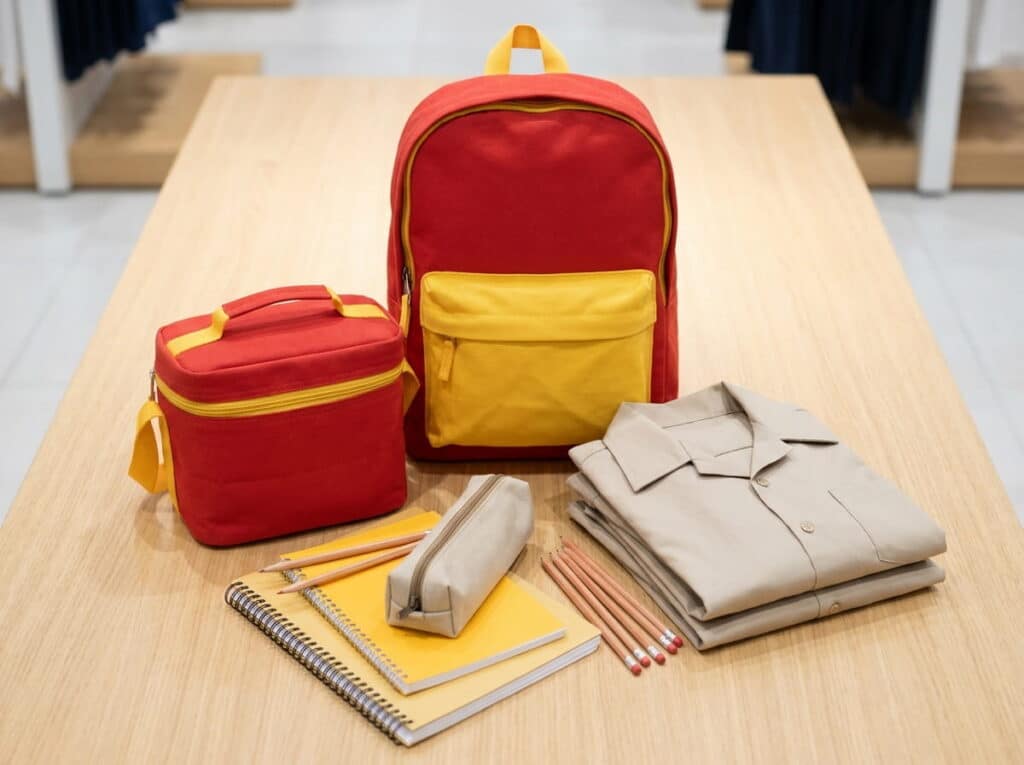
A parent buying one backpack is a single sale. A parent buying a backpack, a lunch bag, and a first-day-of-school outfit in the same visit is a much bigger one — and it happens more often when you make the pairing obvious instead of leaving shoppers to piece it together themselves.
Build a visible “everything you need” display that pairs complementary items from different parts of your store: apparel next to accessories, shoes next to socks, school uniforms next to backpacks and supplies. The goal isn’t a discount — it’s removing the extra trips a shopper would otherwise have to make elsewhere.
Local Community Tie-Ins
Back-to-school is a genuinely community-oriented moment, and independent retailers have an advantage here that big-box chains don’t: an actual relationship with the neighborhood. Partner with a local school for a fundraiser night where a percentage of sales goes back to the PTA.
Run a teacher appreciation event with a small gift-with-purchase for anyone who shows a staff badge. Sponsor a local youth sports team or school event. These tie-ins do double duty — they drive foot traffic during the season, and they build the kind of local goodwill that keeps a store top-of-mind well after August ends.

Turning Social Proof Into Foot Traffic
Parents and students both post about back-to-school prep — new outfits, new supplies, new gear. Give them a reason to tag your store when they do it. A simple “show us your first-day-of-school look” post, a photo-worthy in-store display, or a small incentive for customers who share their haul turns individual purchases into visible, local social proof.
This works especially well for apparel, shoe, and gift retailers, where the purchase itself is something people already want to show off.
Loyalty Incentives That Bring Shoppers Back Mid-Season
Back-to-school isn’t a single shopping day — it’s a multi-week window where the same family might come back two or three times as different needs come up. That makes it a good moment to lean on loyalty tools you may already have: a punch-card style reward for a second visit, points that stack toward a future purchase, or a small perk for referring another parent.
The goal is to make the second and third visit of the season come back to you, instead of a shopper starting over at a different store each time.
Using Real-Time Sales Data to Double Down on What’s Selling
During a compressed, high-volume season, the difference between guessing what’s popular and knowing it in real time is the difference between a good back-to-school season and a great one. If a particular backpack color or supply bundle is moving fast on day two, that’s the moment to feature it more prominently and reorder before it sells out — not two weeks later when the rush is already over.
A retail POS system that surfaces what’s actually selling as it happens, not in an end-of-week report, gives you the chance to act on it while the season is still underway.
Making Sure Your Checkout Can Handle the Rush
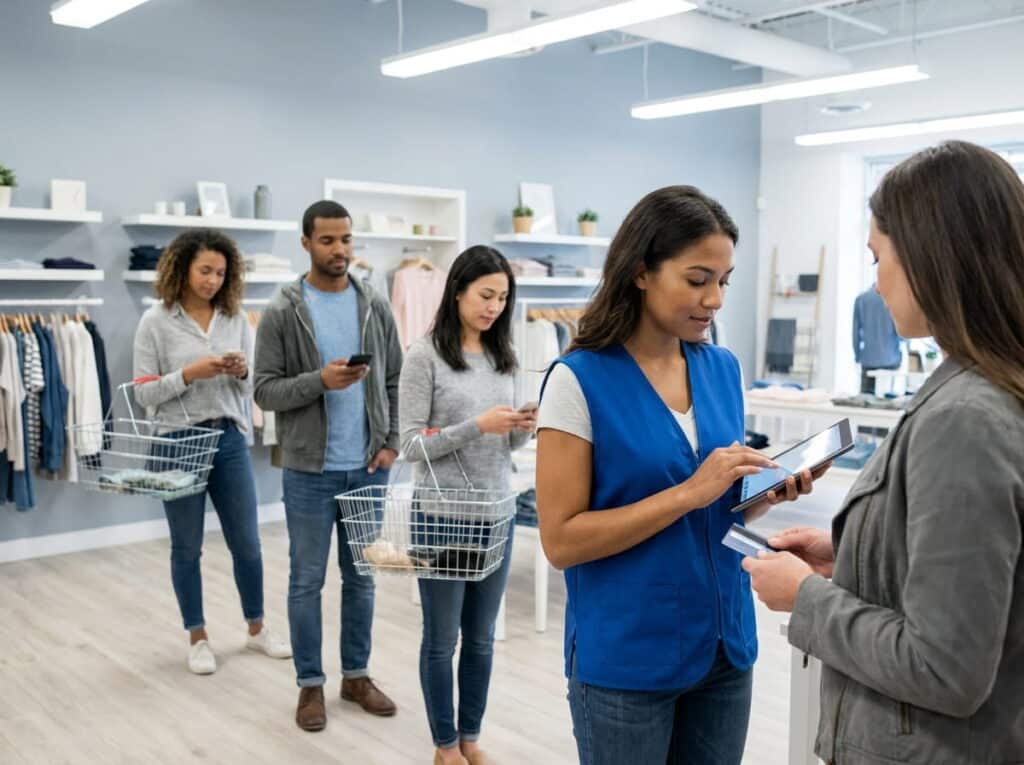
None of the above matters if the checkout line becomes the bottleneck. Back-to-school traffic tends to arrive in waves — after school lets out, on weekends, in the final week before classes start — and a single fixed register can turn a busy day into a line out the door.
Mobile POS lets staff ring up a sale or check stock from anywhere on the floor, which matters most exactly when foot traffic peaks. Having a POS system built to handle multiple registers and mobile checkout means the rush is a busy day, not a bottleneck.
Make This Season Count
Back-to-school rewards the retailers who prepare for it as a season, not a single sale event. Bundle what you sell, show up in the community, turn purchases into visible social proof, and make sure your operations — inventory visibility and checkout speed — can keep up with the rush once it arrives.
Book a FREE Demo Today!
See how RealTime POS can help you handle the rush without the chaos — a free, no-pressure walkthrough tailored to your store’s needs.
Over 50 years of combined retail systems experience · Serving single & multi-store retailers nationwide
Frequently Asked Questions
Is back-to-school marketing only relevant for school-supply or clothing stores?
No. Shoe stores, gift shops, and general independent retailers all see a real seasonal bump as families prepare for the new school year — the tactics here apply to any store with products parents or students might need.
What’s the easiest back-to-school promotion to set up quickly?
A bundle display pairing complementary items — like apparel with accessories, or supplies with backpacks — is usually the fastest to set up and doesn’t require a discount to be effective.
How can I tell what’s actually selling during the rush instead of guessing?
Real-time sales reporting through your POS system shows what’s moving as it happens, so you can reorder or feature bestsellers while the season is still active instead of finding out afterward.
How do I keep checkout lines from slowing everything down during peak traffic?
Mobile POS lets staff complete a sale or check stock from anywhere on the floor, which spreads out the checkout bottleneck during the busiest waves of foot traffic.