Updated: November 10, 2026
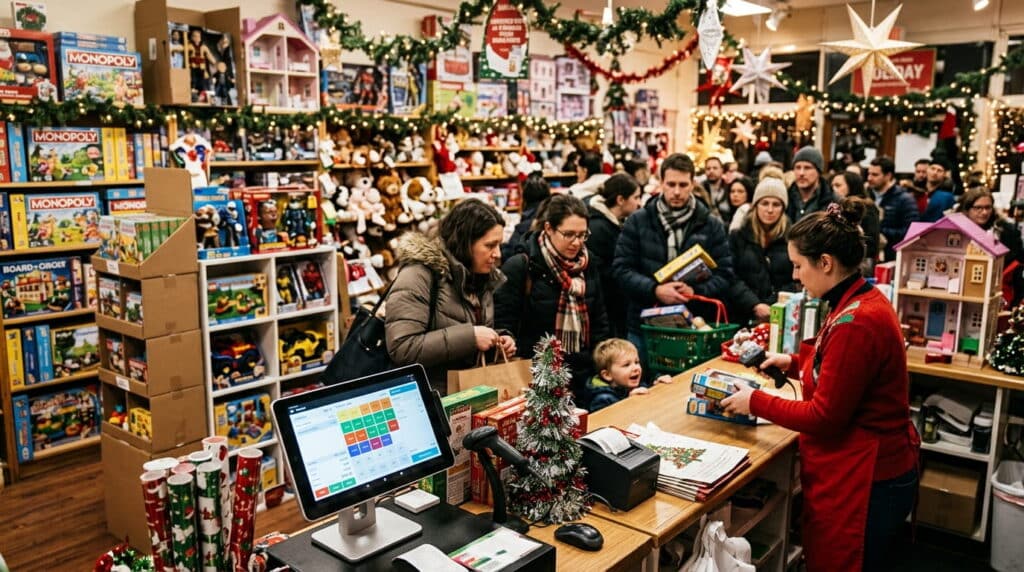
Your January inventory count isn’t like any other count you’ll do this year. This new year inventory count has to account for holiday returns still coming back while you’re trying to count what’s actually on the shelf, and every one that lands after you’ve closed out a section throws the number off again.
Key Takeaways
- Don’t count the moment the holidays end, returns volume stays high for weeks afterward
- 17% of holiday sales get returned, and 82% of those returns happen within a month of purchase, so your count window overlaps with active return volume
- A system with real-time inventory sync narrows the gap a physical count has to close, it doesn’t eliminate the count, but it eliminates a lot of the reconciling
- Full counts and cycle counts solve different problems, picking the wrong one wastes a day
- Returns still in process need a clear rule: counted as stock, or set aside until inspected
- Discrepancies are normal. What you do with them after the count is what actually matters
In This Guide
- When to Do a Post-Holiday Inventory Count
- Why Returns Make This Count Different From Any Other
- What a Real-Time System Still Needs Counted vs. What a Lagging One Has to Reconcile First
- Choosing Your Count Method: Full Count vs. Cycle Count
- Handling In-Progress Returns During the Count
- What to Do With Discrepancies After the Count
- Setting Up for an Easier Count Next Year
- Frequently Asked Questions
When to Do a Post-Holiday Inventory Count
Most retailers wait until inventory is at its lowest point, typically a week or two into January, after the bulk of the holiday sell-through has happened but before spring stock starts arriving. Counting too early means counting inventory that’s about to move again. Counting too late means spring product is already mixed in with what’s left of the holiday season, and you lose the clean read on what actually didn’t sell.
Why Returns Make This Count Different From Any Other
According to NRF’s 2025 Retail Returns Landscape report, 17% of holiday sales were expected to be returned, and 82% of those returns happen within a month of purchase. That means your count window and the heaviest return volume of the entire year overlap directly.
A count done at any other time of year assumes the shelf is relatively stable while you count it. A post-holiday count doesn’t get that assumption. An item you counted on Monday might come back as a return on Wednesday, and if nobody’s tracking it as a separate event, it either gets double-counted or missed entirely.
What a Real-Time System Still Needs Counted vs. What a Lagging One Has to Reconcile First
If you’re evaluating a retail POS system with real-time sync as a priority, this is exactly the day that feature earns its keep. Every barcode scan on RealtimePOS updates stock counts the instant a sale happens, across every register and location, with no manual recounts needed between locations. That matters more in January than any other month, because it means the number you’re counting against is actually current, not a batch update from last night.
| Real-time | Lagging | |
|---|---|---|
| What the count confirms | Physical reality matches what the system already shows | Physical reality vs. a number that may be hours or a full day stale |
| Multi-location accuracy | Every store’s count feeds the same live number | Each location’s lag has to be reconciled separately first |
| Return handling mid-count | A processed return updates the live count immediately | Returns pile up in a queue until the next sync |
A system that’s already accurate going into the count means the count is confirming reality, not discovering how far off reality already was.
Choosing Your Count Method: Full Count vs. Cycle Count
A full count means counting every single SKU in the store at once, usually overnight or with the store closed. A cycle count means counting a rotating subset, say one category per week, all year round, so no single count day carries the whole burden.
For most independent retailers, the post-holiday count is the one time a year a full count makes sense: inventory is at its lowest, the holiday season just created a clean break between old and new stock, and you want one number you trust before spring buying starts. If you’re already running cycle counts through the year, this one can be lighter, more of a confirmation than a full reset.
Handling In-Progress Returns During the Count
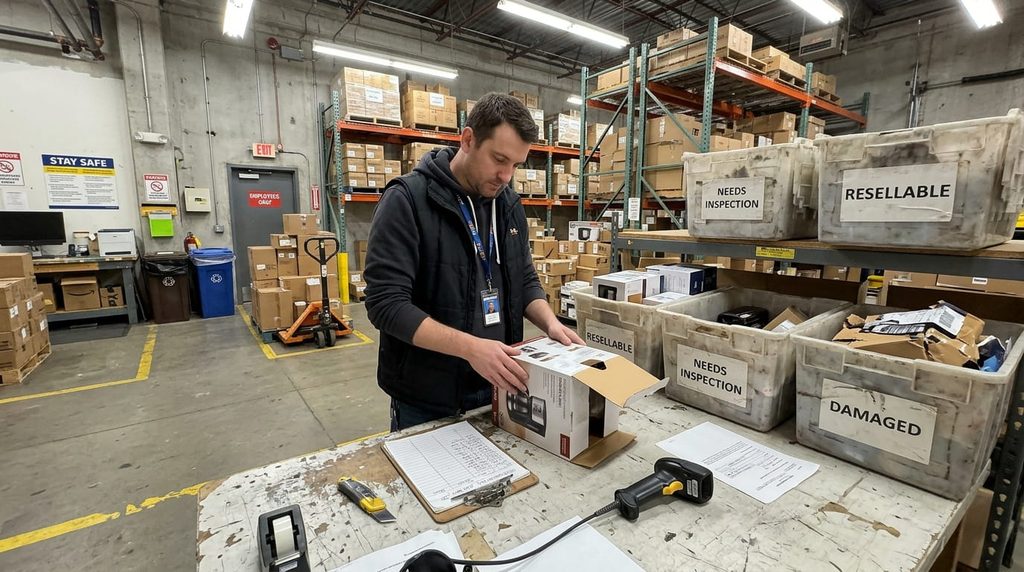
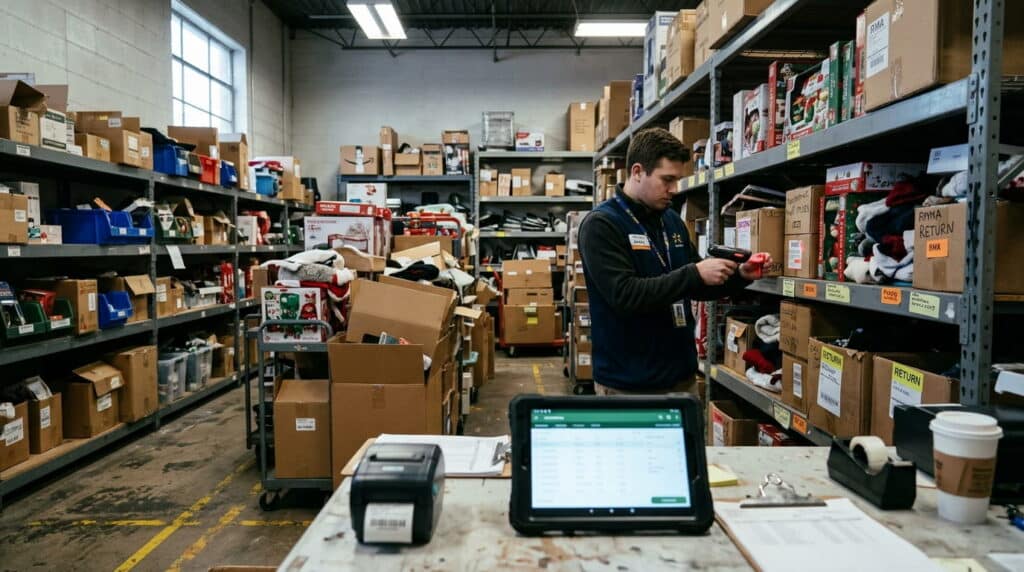
Set a hard rule before the count starts, not during it: any return still in process on count day either gets fully processed and counted as stock, or set aside in a clearly labeled holding area excluded from the count entirely. What doesn’t work is counting it halfway, on the shelf but not yet checked back into inventory, because that’s exactly how the same item ends up counted twice or not at all.
What to Do With Discrepancies After the Count
Discrepancies are normal. A count that matches perfectly is rarer than one that’s off by a little. What separates a useful count from a wasted one is what happens next: every discrepancy gets a reason, not just a corrected number. Shrinkage, a miscounted bin, a return that slipped through uncounted, a transfer that never got logged, each one points to a different fix. Correcting the number without finding the reason means you’ll be back in the same spot next January. Our guide to inventory control covers the broader system for keeping discrepancies from piling up between counts.
Setting Up for an Easier Count Next Year
The retailers who dread this count every year are usually the ones running it as a once-a-year emergency instead of a planned event. Block the date on the calendar in November, not January, the same planning discipline covered in our gift shop holiday POS prep guide. Decide your return-handling rule ahead of time instead of improvising it on count day. And if this year’s count surfaced a pattern, one category consistently off, one location always behind, fix that pattern before next season instead of recounting the same problem twelve months from now.
Frequently Asked Questions
When should you do a post-holiday inventory count?
Typically a week or two into January, after most holiday sell-through has happened but before spring stock arrives. Counting too early catches inventory that’s still moving, too late mixes in new season stock.
How do returns affect a post-holiday inventory count?
17% of holiday sales get returned, and 82% of those returns happen within a month of purchase, according to NRF. That means active return volume overlaps directly with your count window, so you need a clear rule for handling items still in process.
Should I do a full count or a cycle count after the holidays?
For most independent retailers, a full count makes the most sense right after the holidays since inventory is at its lowest and you want one trusted number before spring buying starts. If you already run cycle counts year-round, this one can be lighter.
What should I do if my count doesn’t match my records?
Find the reason behind every discrepancy, not just the corrected number. Shrinkage, a miscounted bin, and an unlogged transfer each need a different fix, and correcting the number alone means the same gap shows up again next year.
See How Real-Time Sync Narrows the Gap Before You Count
Stop reconciling a stale number every January. See how Realtime POS keeps every register and location current, all year.
Final Thoughts
The count itself isn’t the hard part, most of this year’s mistakes already happened before January, they just show up now. A clear rule for in-process returns, a real-time system that’s already close to accurate, and a habit of asking why on every discrepancy turns next year’s count into a confirmation instead of a scramble.