
Updated: November 12, 2026
According to NRF’s 2026 holiday forecast, holiday sales will grow 4.2% this year, topping $1.013 trillion across November and December. It lands on the retailers who had a plan running before Black Friday even started, and who kept marketing straight through to New Year’s instead of going quiet after Christmas Eve. This guide covers the campaigns, promotions, and customer-facing tactics that make up that plan, each tied to the actual point-of-sale mechanics that make it real instead of aspirational.
For the operational side, hour-by-hour Thanksgiving week execution, Black Friday and Cyber Monday system readiness, or a gift-shop POS prep checklist, those are covered in separate guides linked throughout.
Key Takeaways
- Holiday sales are projected to grow 4.2% to $1.013 trillion this November and December (NRF), covering Nov. 1 through Dec. 31, so the window to market in is longer than most retailers treat it.
- Pre-season marketing in October and early November, not a Black Friday email, is what actually captures early shoppers.
- Bundles, tiered gift sets, and short flash sales outperform a flat percentage-off discount for holiday gifting.
- Loyalty and SMS signups captured during the rush are worth more long-term than the sale that got them in the door.
- Marketing doesn’t stop at Christmas. The week after and January clearance are both real marketing windows.
Table of Contents
- Why Holiday Marketing Needs a Season-Long Plan
- Start Early: Pre-Season Marketing in October and November
- Build Promotions Shoppers Actually Want
- Turn Holiday Shoppers Into Repeat Customers
- Merchandising and Checkout: Where Impulse Buys Happen
- Gift Cards Are a Marketing Tool, Not Just a Register Button
- Don’t Stop at Christmas
- A Week-by-Week Holiday Marketing Calendar
- Frequently Asked Questions
Why Holiday Marketing Needs a Season-Long Plan
NRF defines the holiday season as November 1 through December 31, not just the five days around Thanksgiving. Treat the holidays as one Black Friday push plus a round of Christmas-week discounting, and most of that window runs with no plan at all. The retailers who win the season aren’t necessarily the ones with the deepest discount, they’re the ones who showed up in a customer’s inbox or feed every week of the season with something different: a new bundle, a loyalty push, a last-minute gift angle.
If you need the execution detail for the five-day Thanksgiving stretch specifically, see Thanksgiving Week Marketing Ideas for Independent Retailers, which covers that day by day. This section is about the other eight weeks, which, by NRF’s own Nov. 1-Dec. 31 definition, make up roughly 92% of the season’s calendar days.
Start Early: Pre-Season Marketing in October and November
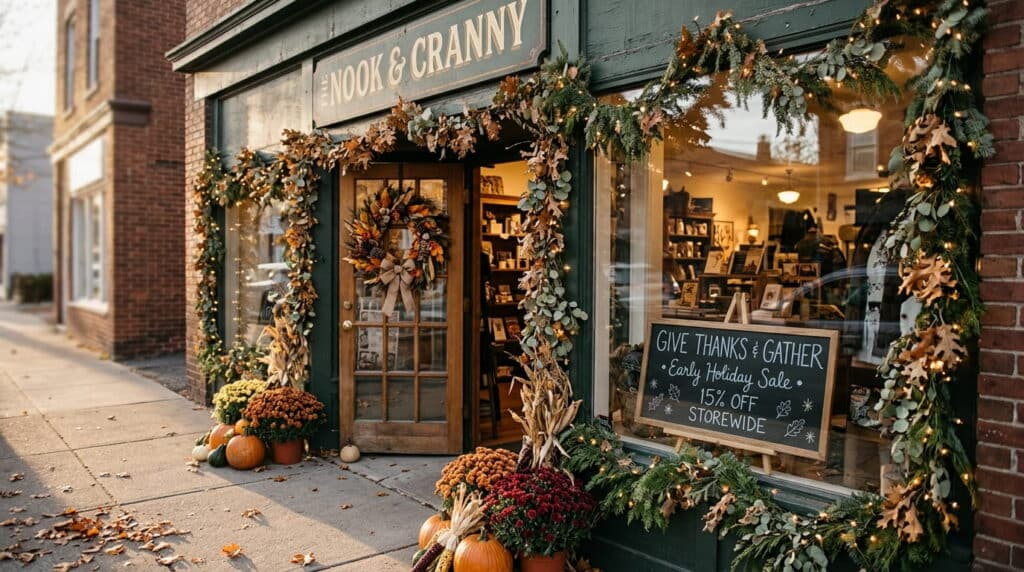
Start holiday marketing in early-to-mid October, not Thanksgiving week. By the time Black Friday ads go out, plenty of shoppers have already started buying, and waiting until then means competing for attention in the loudest, most expensive week of the year instead of the quietest. A simple pre-season move: segment your customer list by last year’s holiday purchases and send an early-access preview two to three weeks before Black Friday, one category, a modest discount, framed as a thank-you to existing customers rather than a sale.
This also gives you a clean read on which products are moving before you commit shelf space and ad spend to them for the full season. If your system can pull last year’s bestsellers directly from sales history, start there instead of guessing from memory.
Build Promotions Shoppers Actually Want
A flat 20% off everything is the easiest promotion to build and the easiest for a shopper to ignore, because every competitor is running the same thing. Bundles and curated gift sets do better during gifting season specifically, because they solve a real problem: “I don’t know what to get this person.” Pair a slow-moving item with a bestseller at a combined price, or build a tiered gift-set structure (under $25, under $50, under $100) that matches how people actually shop for gifts. A second tactic worth running alongside bundles: a short, clearly time-boxed flash sale, a handful of hours rather than a full week, on one specific category.
The time limit is what creates urgency, a sale that runs all week doesn’t. RealtimePOS’s promotions and bundling tools let you build these combinations and schedule a discount window in advance, so neither the bundle nor the flash sale depends on someone remembering to turn it on or off at the right time, in-store or through your connected online store.
Turn Holiday Shoppers Into Repeat Customers
The holiday rush brings in shoppers you’ll never see again, unless you capture them while they’re already at the register. A loyalty signup offered at checkout, with the discount applied immediately rather than promised later, converts far better than a sign-up link emailed afterward.
The same applies to SMS: a one-time holiday shopper who opts into text alerts is now reachable in January, when most retailers go quiet and send nothing at all. What Is SMS Marketing and How It Can Grow Your Business covers how to set this up properly, including the opt-in requirements. The holiday rush is the highest-volume loyalty-capture window you’ll get all year, treat it that way instead of treating every transaction as just a transaction.
That same segmented list is also what makes next year’s October pre-season preview worth running in the first place, so the value compounds season over season instead of resetting every January.
Merchandising and Checkout: Where Impulse Buys Happen
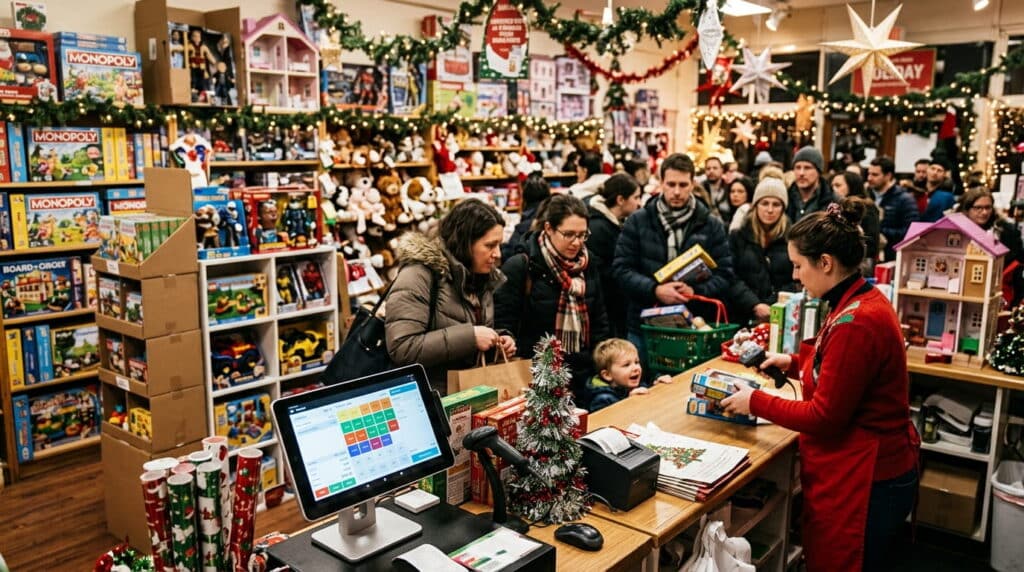
Checkout-line impulse buys work year-round, but they work harder during the holidays because shoppers are already in a gift-buying mindset and looking for one more small thing. Stock the checkout counter with gift-card holders, small stocking-stuffer items, and anything under $15 that doesn’t need a decision. Online, the equivalent is an “add a gift for $X more” prompt at cart, not a generic upsell.
Neither of these needs new technology, it’s a merchandising decision you make once per season and then leave in place through December. The products you put there should rotate as inventory shifts, which is easier to catch if you’re watching sell-through on those specific SKUs weekly, pulled straight from register sales data, rather than assuming the same items work all season just because they did in week one.
Gift Cards Are a Marketing Tool, Not Just a Register Button
Gift cards get treated as a payment feature when they’re really a marketing channel: they bring in a customer who didn’t choose what to buy (the giver) and guarantee a second visit from someone who will (the recipient). Promote gift cards actively in the weeks before Christmas, not just as an option buried at checkout, a physical display near the register and a mention in holiday email campaigns both work.
This is core checkout functionality, not a bolt-on, covered in more depth in our Retail POS System Buyer’s Guide, so a gift card sold in one location and redeemed in another reads from the same balance instead of each store keeping its own tally. RealtimePOS supports gift card issuance and redemption alongside store credit from returns, so the January redemption wave, which is real and predictable, shows up cleanly in your sales data instead of as an accounting headache.
Don’t Stop at Christmas
Most independent retailers go dark on marketing the moment Christmas ends, right when gift cards start getting redeemed and a wave of returns and exchanges begins. That’s a second sales window, not a cleanup chore. A “redeem your gift card” reminder email in the days after Christmas, paired with a small incentive to spend above the card’s balance, captures spending that would otherwise trickle in unprompted over weeks.
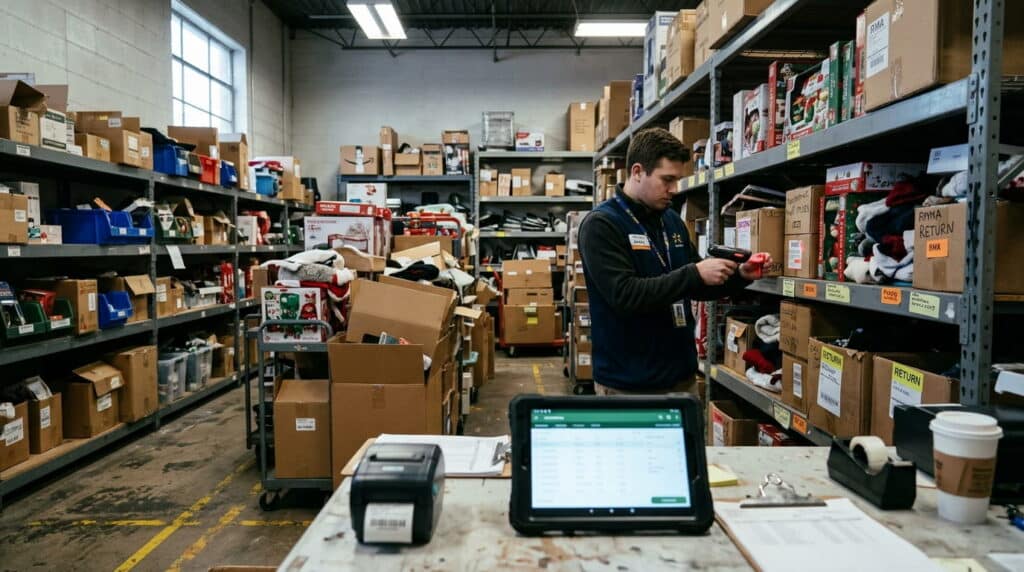
January clearance on leftover holiday inventory is the other half of this, framed as “new year, new stock” rather than a defeated markdown sale. If you’re planning that inventory side specifically, Your First Inventory Count After the Holidays covers the count and audit process this feeds into. Returned stock that syncs back into inventory the moment it’s processed, rather than sitting in a back-room pile until a manual count catches it, is what actually makes a fast January clearance push possible.
A Week-by-Week Holiday Marketing Calendar
Here’s how the tactics above lay out across the full season, week by week:
- Early-mid October: Segment last year’s holiday customers, plan bundles and gift sets, confirm gift card and loyalty setup.
- Late October-early November: Pre-season preview sale to existing customers only.
- Week of Thanksgiving: Follow the day-by-day Thanksgiving week plan; capture loyalty and SMS signups at every checkout.
- Early-mid December: Push bundles and gift sets hardest; run a flash sale; promote gift cards as a solution for undecided shoppers.
- Last weekend before Christmas: Final gifting push, emphasize in-stock items and same-day pickup if offered.
- Dec. 26-31: Gift card redemption reminders, begin January clearance messaging.
- January: Clearance continues; re-engage loyalty and SMS lists captured in Q4 with a non-holiday offer.
Frequently Asked Questions
When should retailers start holiday marketing?
Early-to-mid October for planning and segmentation, with a pre-season preview offer to existing customers in late October or early November, well before Black Friday.
What are the best holiday promotions for independent retailers?
Bundles and curated gift sets tend to outperform flat discounts for gift shopping, pair a slow-moving item with a bestseller or build a tiered gift-set structure. A short, clearly time-boxed flash sale on one category works well alongside them.
How do gift cards help with holiday marketing?
Gift cards bring in a customer who doesn’t know what to buy and guarantee a second visit from whoever receives it. Promote them actively in the weeks before Christmas rather than treating them as a payment option buried at checkout.
Should retailers keep marketing after Christmas?
No, marketing shouldn’t stop. Gift card redemptions and returns both spike in the days after Christmas, and January clearance is a real sales window if it’s framed as fresh stock rather than a leftover sale.
Run Your Holiday Promotions Without the Manual Work
Bundles, loyalty, gift cards, and SMS, all built into the same system that’s already running your checkout.