Updated: November 8, 2026
A toy store doesn’t have one inventory problem, it has two: toy store seasonal inventory splits into a steady year-round base catalog and a short, intense holiday spike. If you’re still evaluating a toy store POS system, this split is the first thing to understand before you pick one. The puzzles, building blocks, and classic board games that sell steadily all year need a different reorder rhythm than the hot item everyone wants in December and nobody wants in February.
Run both through the same flat reorder logic and you’ll either get stuck with holiday leftovers taking up shelf space in Q1, or run out of your bestseller during the three weeks that actually matter.
Key Takeaways
- Toy store inventory splits into two distinct problems: a steady year-round base catalog and a short, intense Q4 spike catalog
- The fourth quarter typically accounts for about 70% of a toy store’s annual sales, so spike-catalog mistakes carry outsized weight
- Tracking demand by category and age grade, not a flat year-round average, is what actually prevents over- and under-stocking
- Layaway still matters for toy retail, it needs to be trackable, not handled on a notepad
- Leftover holiday stock needs a plan before January, not a surprise once it’s sitting on a shelf
- Handling toys without a manufacturer barcode is a real operational detail, worth asking any POS vendor about directly
In This Guide
- Why Toy Store Inventory Breaks Into Two Different Problems
- Your Year-Round Base
- Your Q4 Spike Catalog
- Tracking Seasonal Demand by Category, Not a Flat Average
- Layaways and Special Orders During the Rush
- What to Do With Leftover Holiday Stock in January
- Handling Toys Without a Barcode
- Staffing Up Without Overcomplicating the System
- Frequently Asked Questions
Why Toy Store Inventory Breaks Into Two Different Problems
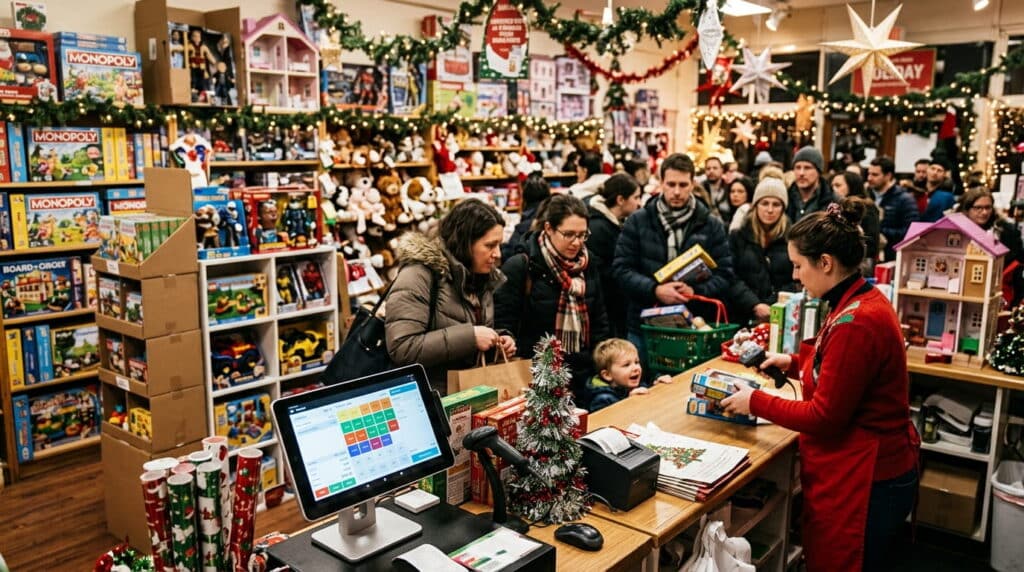
The fourth quarter typically accounts for about 70% of U.S. toy sales, according to Coresight Research. That single number explains why toy retail doesn’t behave like most other categories. A grocery store sees roughly even demand across the year. A toy store sees most of its annual revenue compressed into about eight weeks, and everything outside that window runs on a completely different rhythm.
That split is the whole problem. A reorder system tuned for your February demand will understock you in November. A reorder system tuned for your December rush will leave you buried in excess stock every other month. Treating inventory as one undifferentiated pool is the single biggest planning mistake in toy retail, and it’s the one most generic POS advice skips entirely.
Your Year-Round Base Catalog
Your base catalog is the stuff that sells steadily regardless of season: classic board games, building sets, puzzles, art supplies, the toys parents buy for a birthday in June just as readily as in December. This catalog doesn’t need aggressive restocking, it needs consistency. A reorder point set once and left alone works fine here, because demand doesn’t swing wildly week to week.
The mistake retailers make with the base catalog is applying holiday urgency to it anyway, restocking it heavily in Q4 right alongside spike inventory, then wondering why February’s storage room is full of product that was never going to move faster just because the calendar changed.
Your Q4 Spike Catalog
The spike catalog is everything tied to that specific holiday season: this year’s hot license, the toy that’s trending on social media, anything bought almost exclusively as a gift. This inventory behaves nothing like your base catalog, and treating it the same way is how stores end up either sold out of their bestseller in week two of December or sitting on pallets of it in January.
| Base catalog | Spike catalog | |
|---|---|---|
| Demand pattern | Steady, predictable year-round | Compressed into roughly 8 weeks |
| Reorder approach | Set reorder point, review occasionally | Monitor daily during the rush, adjust fast |
| Risk if mismanaged | Slow dead stock buildup over time | Overselling or post-holiday markdown losses |
| Post-season plan | Not needed, demand stays steady | Required, see section below |
Tracking Seasonal Demand by Category, Not a Flat Average
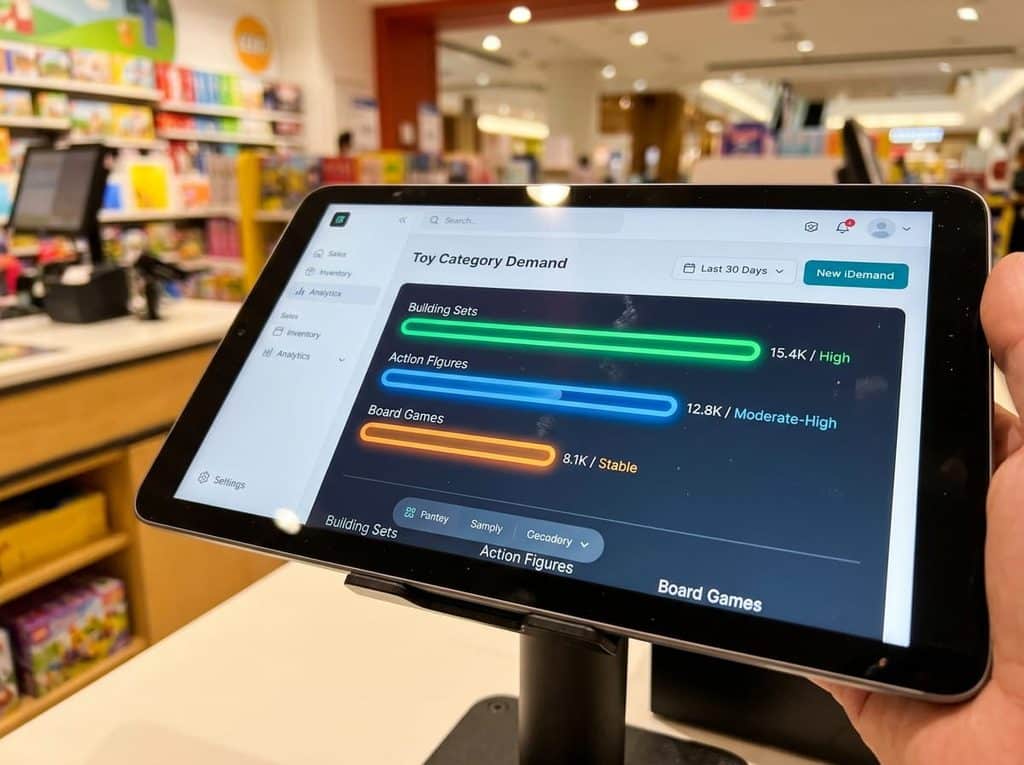
A flat year-round average tells you almost nothing useful in toy retail. What actually matters is demand by category and age grade: action figures spike differently than board games, and both spike differently than infant/toddler toys, which skew less seasonal overall. RealtimePOS tracks seasonal demand patterns by category rather than a flat average, which is what lets you reorder the right stock before it sells out instead of after, and avoid getting stuck with last season’s trend once it’s cooled off.
That category-level view is what separates “we sold a lot of toys this December” from “we sold out of building sets by December 10th and had 40 board games left on January 2nd” (illustrative example), one of those tells you something you can act on next year, the other doesn’t.
Layaways and Special Orders During the Rush
Holiday layaway is still a real part of toy retail, a customer paying down a popular item over several weeks before picking it up in December. That only works if it’s tracked properly, a layaway item sitting in a back room needs to stay out of your sellable count, or you’ll oversell it to the next customer who walks in asking for the same thing. RealtimePOS handles special orders and layaways as a tracked feature, not a sticky note taped to a shelf.
What to Do With Leftover Holiday Stock in January
Holiday sales look great on paper, but January and February can turn expensive fast if leftover spike inventory isn’t planned for ahead of time. (This same before-the-rush discipline is covered from the planning side in our gift shop holiday POS prep guide.) The general playbook: mark down aggressively and early rather than waiting, bundle slow movers with faster-selling base catalog items, and resist the urge to order the exact same spike quantity next year just because this year sold out, chase what’s trending each season, not what trended last season. None of this is a RealtimePOS-specific mechanic, it’s standard retail practice that any toy store needs regardless of what system they run.
Related reading: The Complete Guide to Inventory Control
Handling Toys Without a Barcode
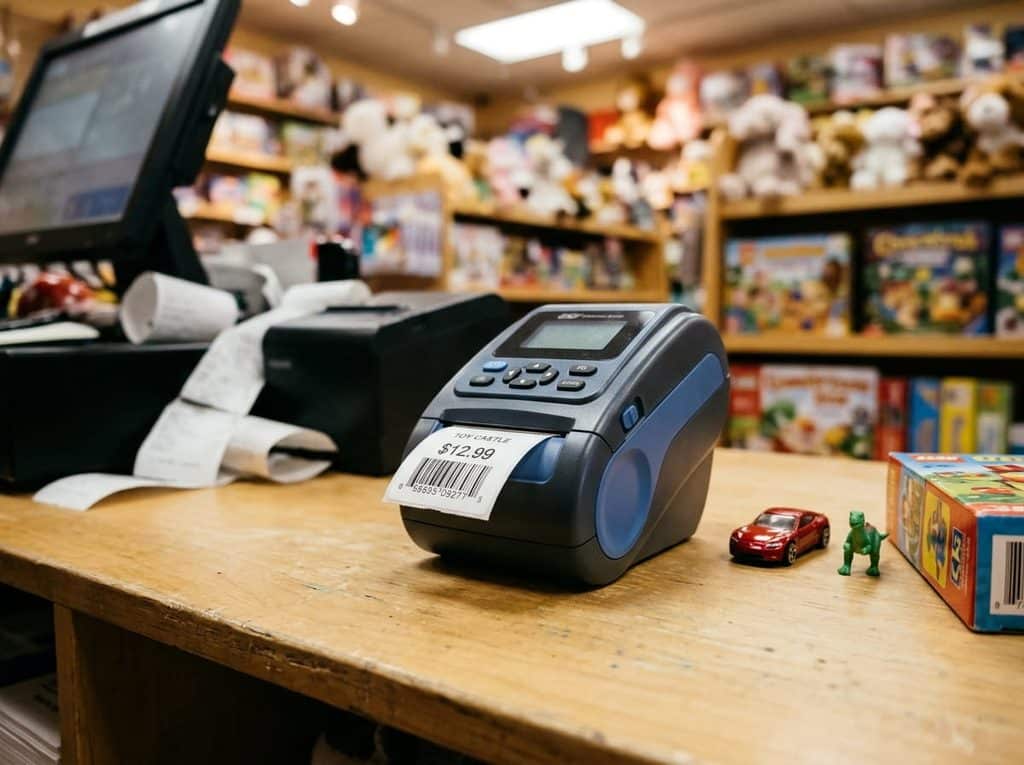
Plenty of toys, especially smaller or bundled items, show up without a scannable manufacturer barcode. If your system can’t generate and print its own labels, that’s a manual price lookup every single time one of those items hits the register, which is exactly where checkout lines back up during the busiest weeks of the year. This is worth asking any POS vendor directly and specifically: can the system generate and print its own codes for items that don’t come with one, and how does that process actually work day to day, not just in the sales pitch.
Staffing Up Without Overcomplicating the System
Most toy stores bring on temporary staff for the holiday season, people who need to be productive within a shift or two, not after a week of training. The practical test here isn’t whether a system has every feature, it’s whether a new hire can ring up a sale, look up stock, and handle a return without someone standing over their shoulder. If a system needs extensive training to perform basic checkout functions, that’s a cost you’ll pay every single November when you bring on seasonal help.
Frequently Asked Questions
How much of a toy store’s annual sales happen during the holidays?
About 70% of U.S. toy sales happen in the fourth quarter, according to Coresight Research. That concentration is why spike-catalog mistakes carry so much more weight than base-catalog mistakes.
How do I avoid overselling my best-selling toy during the holiday rush?
Track demand by category and age grade rather than a flat average, and monitor the spike catalog daily during peak weeks rather than relying on a reorder point set once and forgotten.
What should I do with leftover holiday toy inventory after January?
Mark it down early and aggressively rather than waiting, bundle slow movers with base catalog items, and avoid reordering the same quantity next year just because this year sold out.
Can a POS system handle toys without a barcode?
Ask any vendor directly whether the system can generate and print its own codes for items without a manufacturer barcode, and how that process works day to day, not just in the sales pitch.
See How Realtime POS Tracks Seasonal Demand by Category
Stop running your base catalog and your holiday spike through the same reorder logic. See how category-level tracking actually works.