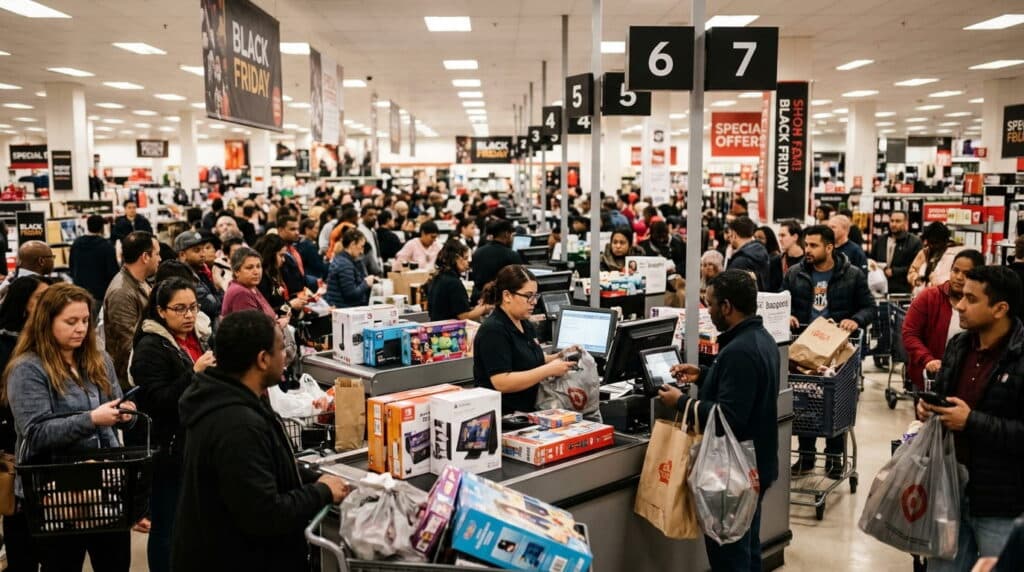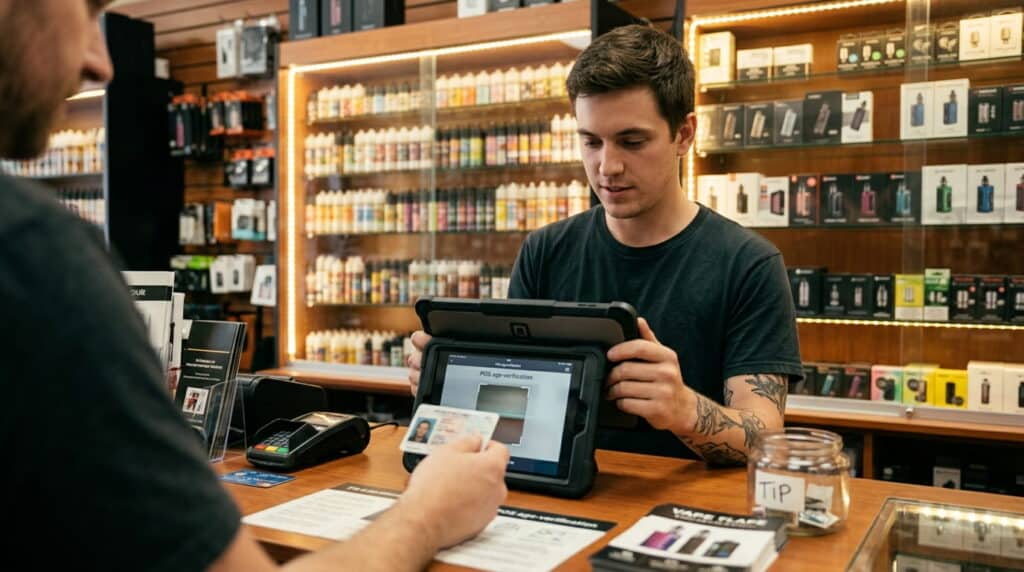

Roughly 16% of retail sales in the US now happen online, and that number keeps climbing. If you’re still running a store without an ecommerce presence, you’re not avoiding the tradeoffs, you’re just delaying the decision. Here’s the honest version: ecommerce isn’t automatically the right move for every retailer, and pretending the disadvantages don’t matter is how stores end up overwhelmed six months after launch. This is what actually matters, not a neutral list of seven pros and seven cons.
Key Takeaways
- Roughly 16% of US retail sales now happen online, per the U.S. Census Bureau, and that share keeps growing, but that doesn’t mean every retailer needs to sell online to survive.
- The three advantages that actually move the needle for a retail store: lower overhead, 24/7 availability, and data you can act on, the rest is secondary.
- High-touch categories, jewelry, furniture, and similar, still face a real trust gap online, ecommerce doesn’t erase the need to let customers see and touch a product.
- The disadvantages a real POS-to-ecommerce integration actually solves, like inventory sync, are different from the ones no software fixes, like competition and trust-building.
In This Guide
The Advantages That Actually Matter for a Retail Store
Every ecommerce guide lists the same seven advantages: global reach, lower costs, 24/7 availability, personalization, scalability, data insights, convenience. Treating all seven as equally important is how retailers end up chasing features that don’t matter for their actual business. Three of these carry real weight for a retail store specifically.
Lower operating costs comes first, not because it’s flashy, but because it’s the one advantage that shows up on your bottom line every single month regardless of how much marketing effort you put in. No added rent, no additional in-store staff for online-only order volume.
24/7 availability is second. Your store closes at 6pm. The internet doesn’t. Every hour your physical location is dark, an online storefront is still taking orders, and for a lot of independent retailers, that’s revenue that would otherwise go to a competitor who happens to be open when the customer is browsing.
Data-driven insights is third, and it’s the one most retailers underuse. Knowing which products actually sell, not which ones you assumed would sell, changes purchasing decisions in a way gut instinct alone can’t.
Global reach, scalability, personalization, and convenience are all real, they’re just secondary. A boutique with 40 loyal local customers doesn’t need global reach to benefit from ecommerce, it needs the other three.
The Disadvantages Worth Taking Seriously
The honest version of the disadvantages list is shorter than most guides admit. Shipping and logistics complexity, security obligations, and the competitive noise of an already-crowded market are the three that actually change how you should approach ecommerce, not just discomforts to shrug off.
Security isn’t just “keep customer data safe” anymore. If you’re handling payment data online, you’re operating under real privacy law, GDPR if you have EU customers, CCPA if you have California ones, and a data breach doesn’t just cost money, it costs the trust that took years to build.
Shipping and logistics is where a lot of retailers underestimate the real cost. A single lost package or a slow carrier during a busy season does more damage to a first-time online customer’s trust than almost anything else you control.
Competition is the disadvantage nobody can automate away. You’re not just competing with the store down the street anymore, you’re competing with every retailer selling something similar within a few clicks of your customer. Standing out takes real, sustained effort, not a one-time SEO push.
The Trust Gap: What Doesn’t Sell Well Online
Here’s what most advantages-and-disadvantages guides miss entirely: some products just don’t sell well online, no matter how good your website is. High-touch categories, fine jewelry, furniture, anything a customer wants to physically inspect before spending real money, still face a genuine trust gap in ecommerce. A customer buying a $40 t-shirt online takes on almost no risk. A customer buying a $2,000 dining set sight-unseen takes on a lot.

This isn’t a reason to skip ecommerce if you sell in one of these categories, it’s a reason to treat your online store as a complement to your physical one, not a replacement for it. Detailed photos, video walkthroughs, and a genuinely easy return policy narrow that gap, but they don’t close it entirely.
What a Real POS Integration Solves, and What It Doesn’t
Not every disadvantage on this list gets fixed by better software. Competition and the trust gap are real tradeoffs you manage, not problems a tool solves. But a few of them genuinely are integration problems in disguise.
In the accounts we’ve worked with, the retailers who get burned by going online aren’t the ones who picked the wrong platform, they’re the ones who never connected their inventory in the first place.
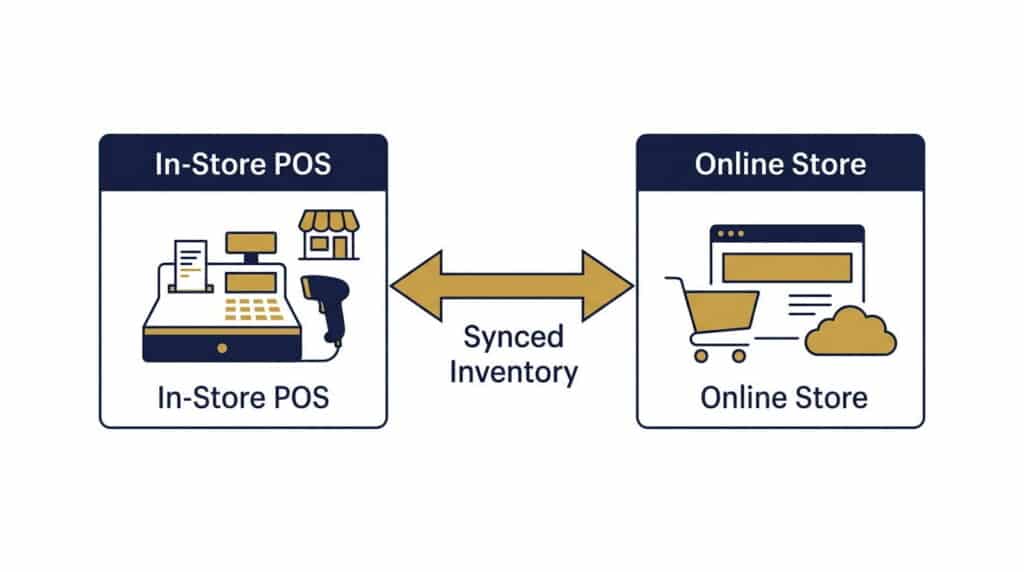
Inventory tracking across a physical store and an online storefront is one. If your point of sale system and your ecommerce platform run as two separate, disconnected systems, you’re the one manually reconciling stock counts, and that’s exactly where overselling and stockouts come from. Connecting your POS system to your ecommerce platform closes that gap directly. Real-time inventory sync and the real cost of manual inventory tracking cover this specific failure mode in more depth.
Reporting is the other one. Deciding what to stock, restock, or discontinue based on real sales data across every channel, not a gut feeling, is what data-driven insights actually looks like in practice, not a vague promise.
Once you’ve decided ecommerce is worth it, the Smart Way to Simplify eCommerce Operations covers the operational side, warehousing, order management, and returns, once you’re actually running it.
Frequently Asked Questions
What percentage of retail sales happen online today?
Roughly 16% of total US retail sales now happen online, according to the U.S. Census Bureau, and that share has been growing steadily year over year.
What kinds of products still struggle to sell online, even as ecommerce grows?
High-touch, high-consideration categories, fine jewelry, furniture, and similar products customers want to see or try in person before buying, still face a real trust gap online compared to lower-cost, lower-risk purchases.
Do ecommerce security requirements include specific privacy laws like GDPR or CCPA?
Yes. If you handle customer data from EU residents, GDPR applies; if you handle data from California residents, CCPA applies. Both carry real compliance obligations beyond generic keep data safe advice.
Can a retailer sell both in-store and online without picking one over the other?
Yes, and for most retailers that’s the better approach rather than treating ecommerce as a replacement for a physical store, especially in high-touch categories where customers still want to see a product in person first.
Ready to Sell In-Store and Online Without the Guesswork?
See how Realtime POS keeps your inventory synced across every channel, so going online doesn’t mean losing control of your stock.
Book a Free Demo View Pricing