
Updated: October 6, 2026
A missed purchase order means a shelf that stays empty until someone notices. A duplicated one means paying twice for the same inventory. For most independent and multi-store retailers, purchase orders aren’t paperwork, they’re the thing standing between knowing what you need and actually getting it on the shelf. Retailers worldwide are on pace to lose $1.7 trillion in 2026 to what the industry calls inventory distortion, stock that’s either piled up unsold or missing when a customer wants it. That’s 6.2% of global retail sales, actually down from 10.4% in 2021, progress, but still real money. At the store level, the purchase order is the lever that actually moves that number, get it wrong and you’re either overstocked or empty-shelved.
Key Takeaways
- A purchase order becomes a legally binding contract once a supplier accepts it, not just an internal note.
- Manual PO processes break down the same way every time: orders get lost, approvals get delayed, and you get no real visibility into what’s already on order.
- When comparing PO management tools, automation depth matters more than the feature list, how much of the process actually runs without someone checking it.
Table of Contents
- What Is a Purchase Order?
- How Purchase Orders Work
- Why Purchase Orders Matter in Retail
- Types of Purchase Orders
- Common Challenges with Manual Purchase Orders
- Automating Purchase Orders with POS Software
- What to Look for When Comparing Purchase Order Tools
- Best Practices for Managing Purchase Orders
- Frequently Asked Questions
What Is a Purchase Order?
A purchase order is a formal document a buyer sends to a supplier to request specific products or services. It includes item descriptions, quantities, prices, delivery dates, payment terms, and shipping instructions. Once accepted, it becomes a legally binding contract protecting both parties.
How Purchase Orders Work
The process runs through six steps: purchase requisition, PO creation, supplier approval, delivery and receipt, invoicing and payment, and record-keeping. Each stage ensures accuracy and establishes clear communication between buyer and supplier.
Why Purchase Orders Matter in Retail
POs improve inventory accuracy, strengthen vendor relationships, control spending through approval systems, simplify accounting when integrated with POS systems, and provide business insights about purchasing trends and supplier performance.
Types of Purchase Orders
Four main types exist: Standard Purchase Orders for routine purchases, Blanket Purchase Orders for ongoing orders over time, Contract Purchase Orders for long-term terms, and Planned Purchase Orders for known items with variable delivery dates.
Common Challenges with Manual Purchase Orders
Manual systems using spreadsheets or paper create real problems: lost or duplicate orders, delayed approvals, data entry errors, and poor visibility into spending and stock flow.
Automating Purchase Orders with POS Software
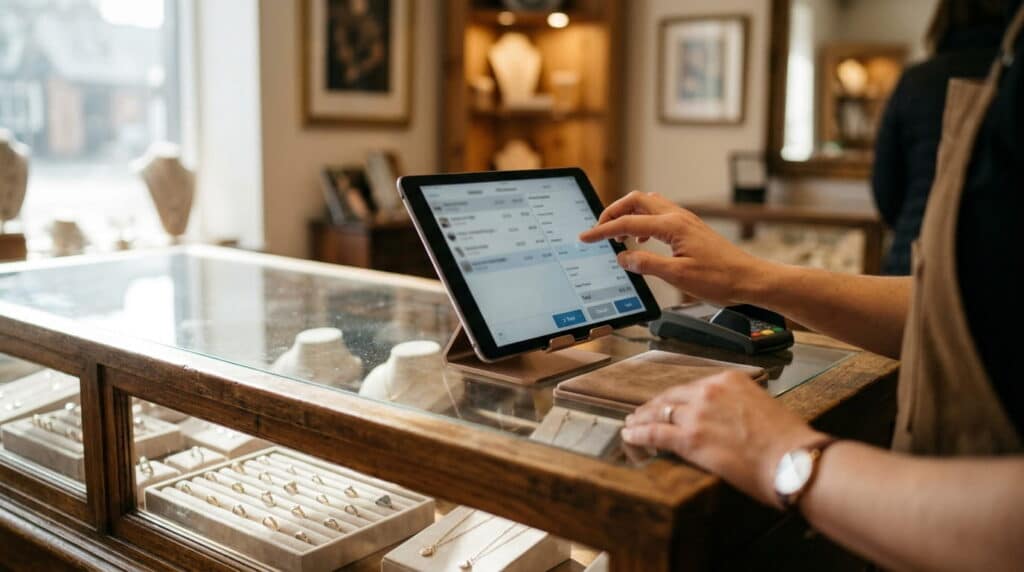
Modern POS systems automate PO creation and tracking, generating orders instantly from low-stock alerts, syncing with suppliers in real time, tracking centrally across locations, and feeding straight into accounting. Not all automation is the same depth, though. Some systems just digitize the paperwork, you still approve, chase, and reconcile everything by hand, just on a screen instead of paper. Others, including Realtime POS, calculate reorder suggestions automatically from preset minimum and maximum inventory levels, so the system flags what needs ordering before someone has to notice a gap on the shelf.
In our experience helping retailers set this up, the ones who get the most value from automated reorder suggestions are the ones who set realistic min/max thresholds first, not the ones who turn on every automation feature at once and hope it sorts itself out.
What to Look for When Comparing Purchase Order Tools
If you’re evaluating options, including your current system, a few questions cut through the feature lists fast:
How much of the process actually runs without you?
A tool that auto-generates reorder suggestions from stock thresholds is doing real work. One that just gives you a digital form to fill out isn’t.
Does it track vendors, not just orders?
Vendor costs, minimums, and alternate suppliers matter as much as the order itself, especially when your primary vendor is out of stock.
Does it work across every location from one place?
A multi-store retailer creating POs one location at a time is still doing manual work, just with better software.

Best Practices for Managing Purchase Orders
Standardize PO templates, set clear approval workflows, use automation tools where they genuinely remove manual steps, keep vendor data current, and regularly review purchase data to catch patterns worth acting on.
Conclusion
A purchase order is a small document that controls a surprisingly large amount of a retail business, what gets ordered, what gets paid, and whether the shelf stays stocked. The retailers who get this right aren’t the ones with the most paperwork discipline, they’re the ones who automated the parts that don’t need a human decision and kept their attention on the parts that do.
Frequently Asked Questions
How can retailers create and manage purchase orders?
What’s the difference between manual and automated purchase order processing?
What should I look for when comparing purchase order management tools?
What are best practices for automating blanket purchase orders?
See Your Purchase Orders Run Themselves
Walk through your actual reorder thresholds and vendor list with us, and see exactly what gets automated versus what still needs you.
No pressure, no obligation, just a real walkthrough.