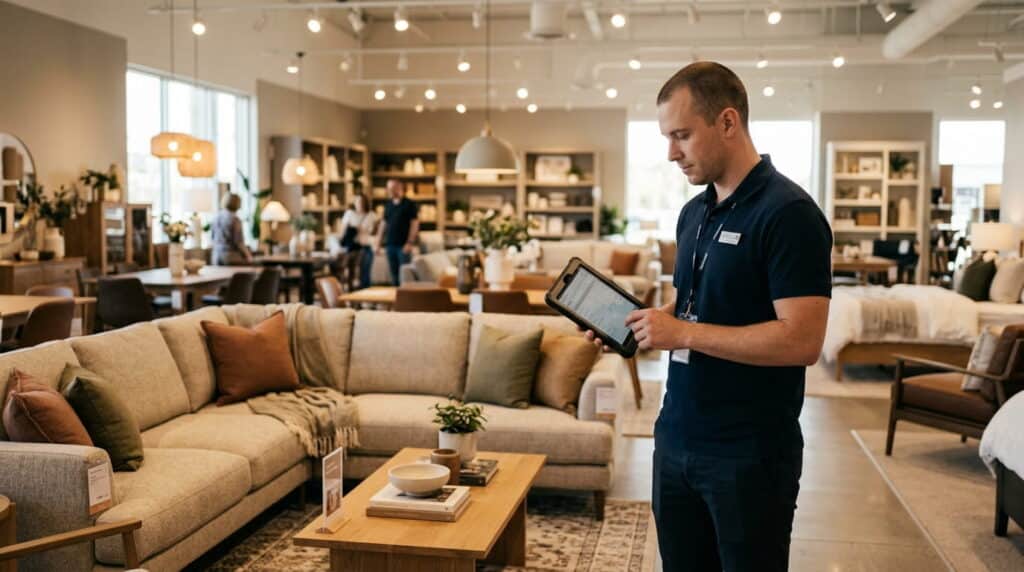
A customer finds the sofa they want online, drives to your showroom, and you have to tell them it’s actually the only floor sample you have, and someone already put a hold on it an hour ago. That’s not a small glitch. For a $2,000 purchase, that’s the moment a customer stops trusting your website entirely, and probably starts shopping a competitor’s instead.
Furniture is one of the most research-heavy, big-ticket categories in retail, which makes furniture retail online in-store integration matter more than it does almost anywhere else. Customers study options online for days or weeks before ever walking into a showroom, or they see something in-store and finish the purchase later from their phone. If what’s “in stock” online doesn’t match what’s actually in the building, every other part of your omnichannel strategy is built on a broken foundation.
Key Takeaways
- Furniture is a high-consideration, big-ticket category, customers research extensively online before buying in-store or vice versa, more than almost any other retail segment.
- “In stock” means something different for furniture: a floor sample, a special order, a delivery slot, not just a SKU count.
- U.S. furniture and home furnishings store sales ran $10.4-10.6 billion monthly through 2026, real money riding on getting this right.
Table of Contents
- Why Omnichannel Matters More for Furniture Than Most Retail
- What “In Stock” Actually Means for a Furniture Retailer
- Floor Samples: The Inventory Problem Nobody Talks About
- Special Orders Need to Be Visible Everywhere
- Delivery Scheduling Is the Piece Most Omnichannel Advice Skips
- What to Fix First
- Frequently Asked Questions
Why Omnichannel Matters More for Furniture Than Most Retail
Furniture customers don’t buy on impulse. They research dimensions, compare finishes, read reviews, and often visit a showroom specifically to see and touch something they already found online. That research-heavy pattern means your online presence and your showroom aren’t two separate channels, they’re two steps in the same purchase, and if the information doesn’t match between them, you lose the sale before the customer ever says a word to your staff.
Comparison table:
| Generic Retail “In Stock” | Furniture Retail “In Stock” |
|---|---|
| A SKU count in a database | Could be a floor sample, not a stockroom unit |
| Available now | Could mean “available after a 6-8 week special order” |
| Same item everywhere | The showroom unit may be the only unit, period |
| No delivery coordination needed | Needs a delivery slot, not just a shelf pull |
What “In Stock” Actually Means for a Furniture Retailer
For most retail categories, “in stock” is a simple yes or no. Furniture has at least three different versions of “yes”: a floor sample sitting in the showroom, a unit in the stockroom ready to go home today, and a special order that won’t exist in your building for weeks. Treating all three the same online is how a customer ends up driving to your store for something that was never actually available the way your website implied.
Floor Samples: The Inventory Problem Nobody Talks About
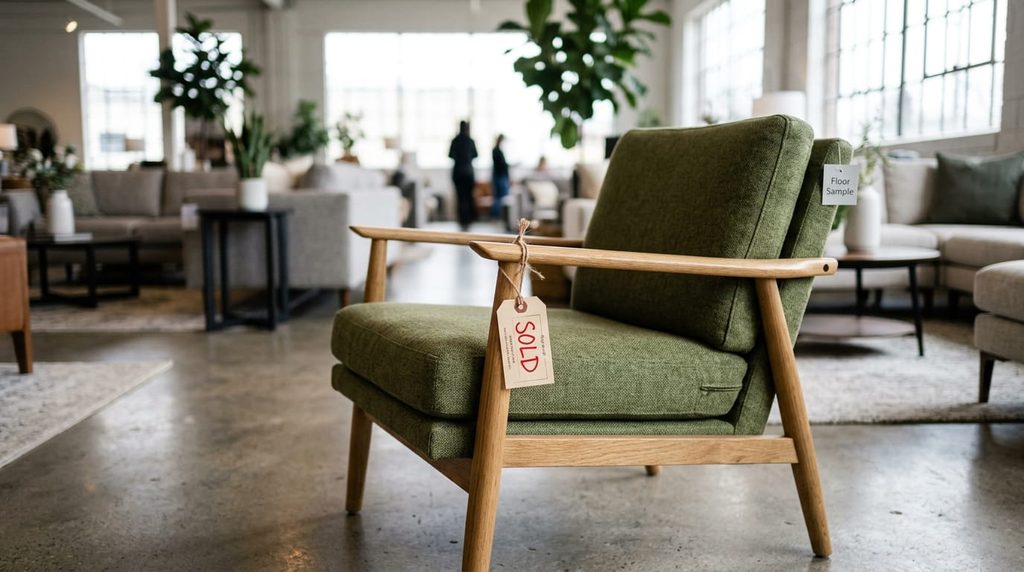
In the furniture stores we’ve worked with, floor samples are the single most common source of online-to-in-store mismatches, and almost nobody accounts for them specifically. A floor sample is real inventory, customers can see it, sit on it, buy it, but it’s also often the only unit you have, and once it’s sold or held, it needs to disappear from “available” everywhere, not just at the register. A system that treats the floor sample the same as a warehouse unit is going to overpromise it eventually.
Special Orders Need to Be Visible Everywhere
A special order placed in the showroom and a special order placed online shouldn’t live in two different systems that nobody cross-checks. A customer who orders online should be able to see the same real status a staff member would see on the floor, not a generic “processing” message that hasn’t actually updated since the order was placed. When that status lives in one place instead of two, your staff stops fielding “where’s my order” calls they can’t actually answer without digging through a separate system.
Delivery Scheduling Is the Piece Most Omnichannel Advice Skips
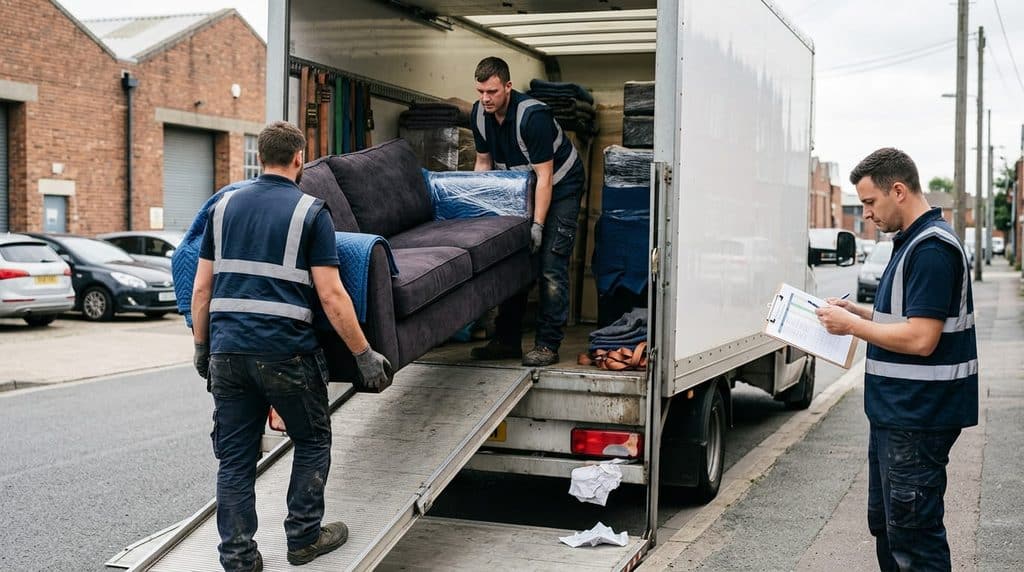
Most generic omnichannel advice is written for categories where “fulfillment” means shipping a box. Furniture means scheduling a delivery crew, and that scheduling has to reflect what’s actually been sold through every channel, not just what’s been rung up at the register that day. If online orders, special orders, and in-store sales aren’t syncing in real time, your delivery team can end up scheduling a truck for an item someone already picked up, or missing one that’s ready to go.
What to Fix First
If you’re starting from separate showroom and online systems, and want real-time inventory for your furniture store instead of two disconnected counts, fix these in order:
- Flag floor samples as their own inventory state, not interchangeable with stockroom units, so “available” online actually means available.
- Give special orders one real-time status, visible to staff and customers alike, instead of two disconnected tracking systems.
- Sync delivery scheduling to actual sales, across every channel, not just what sold at the register that day.
- Connect your POS to your online store directly, real-time sync between the two is what makes the first three fixes possible at all. If you’re weighing how fast that sync actually needs to run for a category like furniture, our guide to POS and ecommerce integration covers exactly that.
- Start with the showroom-to-online direction first, since that’s where the floor-sample mismatch does the most damage, then build out the reverse.
A furniture store POS built around these specific problems handles floor samples, special orders, and delivery coordination as part of the same system, not three separate fixes bolted together.
Frequently Asked Questions
Why does omnichannel matter more for furniture stores than other retail?
Furniture is a high-consideration, big-ticket purchase, customers research heavily online before buying in-store, or see something in-store and finish online. If your online and showroom inventory don’t match, you lose trust at the exact moment a customer is deciding whether to buy.
How do you keep floor samples from showing as in-stock online?
Floor samples need to be tracked as their own inventory state, not treated the same as a stockroom unit. Once a floor sample is sold or held, that status needs to update everywhere it’s listed, not just at the register.
Can customers track a furniture special order placed online?
They can, if the special order has one real-time status visible both to staff and customers. The problem most stores run into is two disconnected systems, one for in-store orders and one for online, that never actually sync.
Does going omnichannel mean I need a full ecommerce site?
No. The core fix is syncing your existing POS and online inventory in real time, not necessarily building a full ecommerce operation. For most independent furniture retailers, getting floor samples, special orders, and delivery scheduling to sync correctly matters more than the size of the online store itself.
Keep Your Floor Samples and Online Stock in Sync
Floor samples, special orders, and delivery scheduling, all tracked together, in real time.
Explore Furniture Store POS Schedule a Demo