
Updated: October 28, 2026
A customer asks for a size 9, wide. The shelf has a dozen 9s in stock, every one of them medium. The sale walks out the door, not because the store was out of stock, but because nothing in the inventory system ever separated width from size, so nobody noticed the gap until a customer found it standing at the counter.
That’s the real cost of treating width as an afterthought: a reorder system that works perfectly by the numbers can still be restocking the wrong shoes.
Key Takeaways
- Size and width solve two different fit problems, not one.
- Width confusion is systemic: the same letter means a different actual width for men and women.
- A reorder system that only tracks size can look healthy while a specific width is completely dead.
Table of Contents
Size and Width Are Two Different Problems
Size tells you how long the shoe is. Width tells you how much room it has. A customer can be exactly right on size and still walk out because the shoe pinches, a fit problem no amount of size-based reordering will ever fix. Most retail systems, and most retailers’ own mental model of inventory, treat width as a variant buried inside the size, not a dimension worth tracking on its own. That’s the root of the problem.
What the Width Letters Actually Mean
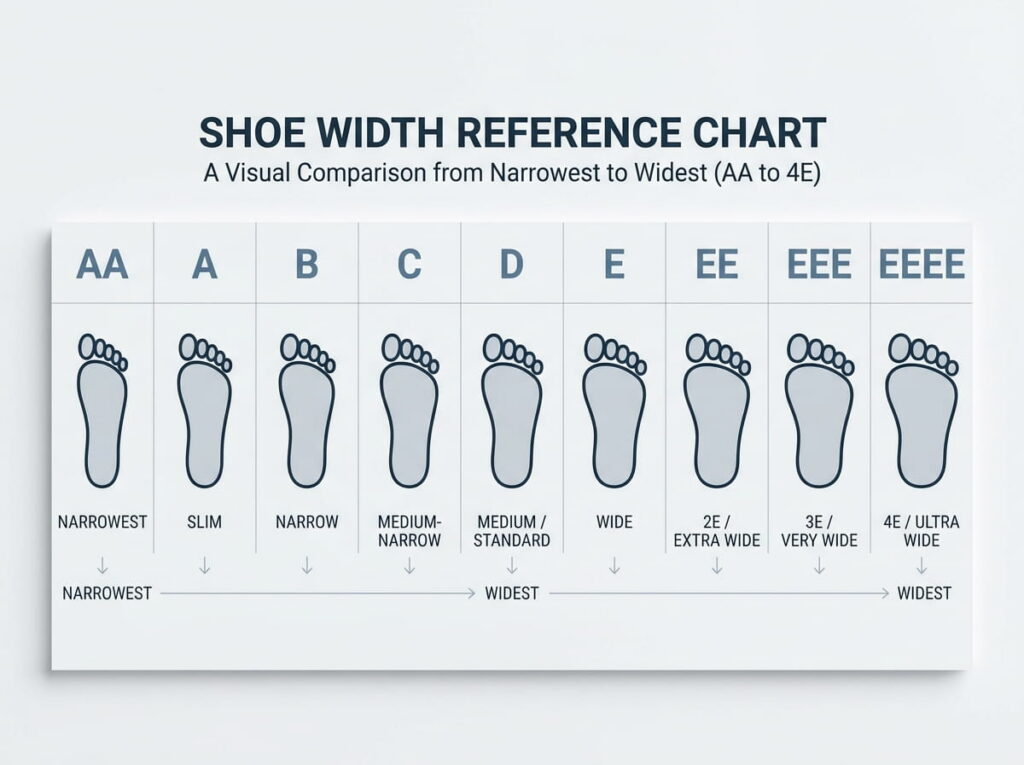
Shoe width uses a letter scale, narrowest to widest: AA, A, B, C, D, E, EE (2E), and up to 4E for the widest options. Most people have never seen the full scale written out, they know “wide” or “narrow” from a shoebox label.
Width Letter Reference:
| Letter | Typical Fit |
|---|---|
| AA / A | Narrow to extra narrow |
| B | Standard for women, narrow for men |
| D | Standard for men, wide for women |
| EE / 2E | Wide |
| 4E | Extra wide |
Why the Same Letter Means Something Different for Men and Women
A D width is not the same shoe fit for a man and a woman. For men, D is the standard, medium width. For women, D is a wide. Same letter, different actual fit, which is exactly the kind of detail that gets lost when a POS system treats width as a single generic attribute instead of something tied to the specific style and gender fit it describes.
What Happens When Width Isn’t Tracked Separately
When a system only tracks “size 9 sold,” the reorder logic restocks size 9, full stop. It has no way to know that every 9 that sold last month was wide, and every 9 sitting on the shelf now is medium. In our installs, this is the single most common blind spot we see: a size-level sell-through report reads as perfectly healthy while one specific width sits completely dead, because the report was never built to ask the width question in the first place.
This is the same blind spot that leads to broken size runs, just one level deeper. A system that only sees size misses the fit mismatch entirely, not because the data is wrong, but because it was never asked the right question.
The Real Scale of the Problem
This isn’t a niche edge case. A single shoe style at 3 widths, 12 sizes, and 3 colors is already 108 distinct SKUs before anyone even looks at which specific combinations are actually selling.
The fit gap behind that number is real too. Research from Volumental, based on scans from 2 million US consumers across more than 600 stores, found that 69% of men and 71% of women would get a better fit if offered just one more width option. That’s not a rounding error, it’s most of the customer base walking around in a width that’s close but not actually right.
That same invisible-gap pattern shows up in broken size runs, a different symptom of the same root problem: aggregate numbers that hide what’s actually happening at a granular level.
Tracking Width as Its Own Inventory Dimension
The fix isn’t a better size chart on the wall, it’s a matrix inventory system, one that treats width as a real, trackable attribute alongside size and color, not a note in a product description.
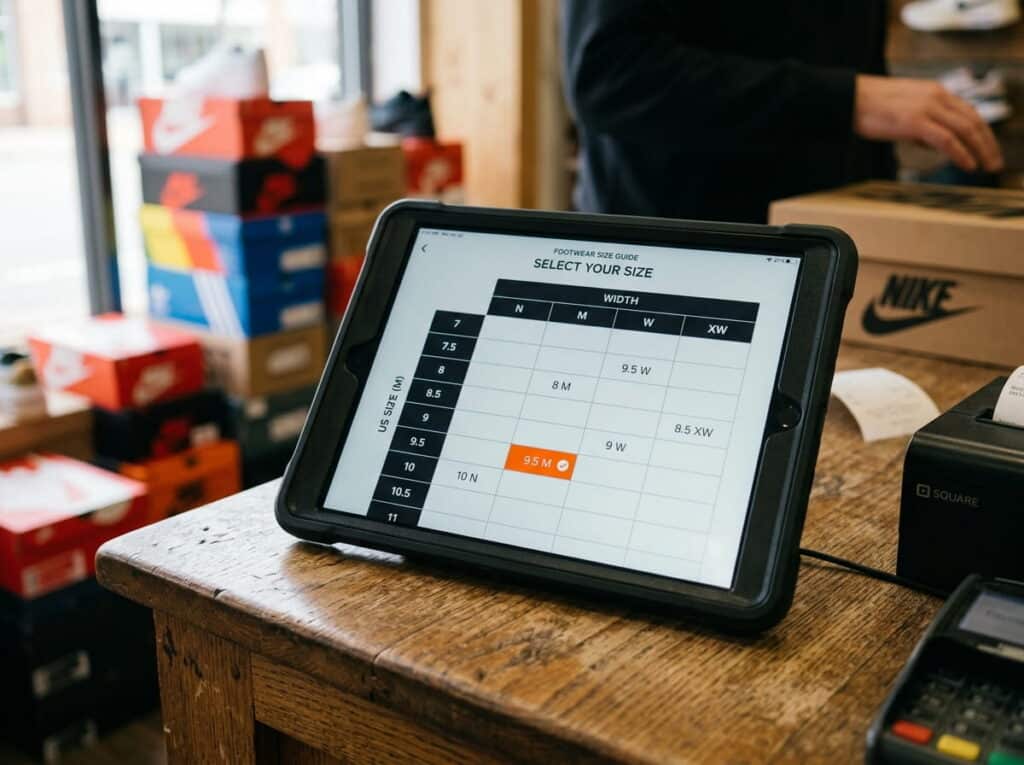
RealTime POS’s Matrix product tracking covers style, size, and color as standard, and width can be tracked as an additional parameter, so a style, size, and width combination doesn’t get folded into a generic ‘size 9’ bucket. That means reorder points, sell-through reports, and stock alerts can all see width gaps directly, instead of a manager noticing them by accident during a slow afternoon on the floor.
What This Looks Like Day to Day
In practice, this changes two things. First, reorder suggestions reflect what actually sold, size 9 wide specifically, not size 9 in general, so the next shipment doesn’t quietly repeat the same gap. Second, for multi-location retailers, width-specific stock becomes visible across every store, so a customer who needs a wide 9 can be pointed to the location that actually has it instead of being told the item is “in stock” somewhere in the system with nobody able to say where. That kind of real-time inventory visibility across every location is what makes the width-level data useful instead of just technically present.

Conclusion
Size gets all the attention because it’s the number printed on the box. Width is just as real a fit problem, and ignoring it as its own inventory line doesn’t make it go away, it just keeps the gap invisible until a customer finds it for you. Track width the same way you track size, and the gaps stop being a surprise.
Frequently Asked Questions
Why does shoe width matter as much as size?
Is a D width the same for men’s and women’s shoes?
What happens if a POS system doesn’t track width separately?
Does width tracking help multi-location shoe stores?
See Width Tracked Like a Real Inventory Line, Not a Footnote
Walk through your actual size and width matrix with us, and see exactly how the gaps get caught before a customer finds them.
No pressure, no obligation, just a real walkthrough.