A great Halloween promotion can lose you sales instead of winning them. That sounds backwards, but it’s exactly what happens when a store runs a bundle deal or a social contest that actually works, drives a real spike in traffic, and then can’t keep the shelf accurate or the line moving fast enough to close those sales.
Consumers are expected to spend $13.5 billion on Halloween this year, an average of $115.14 per person, according to the National Retail Federation). That’s real money moving through a very short window. Get the ideas right and the operations wrong, and you’re still leaving sales on the table.
Key Takeaways
- Halloween spending is expected to hit $13.5 billion this year, and most of it moves through a compressed selling window, not a spread-out season.
- The pre-Halloween push and the post-Halloween markdown are two separate decisions with two separate timelines. Treat them that way.
- Nearly half of Halloween shoppers buy in September or earlier, so “start early” has an actual deadline attached to it.
- The idea isn’t the hard part. Keeping inventory accurate and checkout fast during the one week demand peaks is.
Table of Contents
- Start With Your Inventory, Not Your Sale Idea
- When to Start Halloween Marketing
- Idea 1: Bundle Costumes, Decor, and Candy Together
- Idea 2: Trick-or-Treat Style Reveal Promotions
- Idea 3: Tailor Your Angle to Your Retail Type
- Idea 4: Local and Community Tie-Ins
- Idea 5: Plan the Post-Halloween Clearance Now
- Keeping Checkout Fast During Halloween Week
- Frequently Asked Questions
Start With Your Inventory, Not Your Sale Idea
Costume demand peaks in the single week before Halloween. Not the month before, the week before. That’s a hard fact to plan around, because it means whatever inventory or checkout gaps you’ve been living with the rest of the year get compressed into five or six days where they suddenly cost you real sales.
A sync gap you can shrug off in July becomes a stockout you can’t recover from in late October. In our work with independent and multi-store retailers over more than 50 years combined, the pattern is consistent: the stores that get burned during a seasonal spike weren’t running bad promotions, they were running fine promotions on top of a system that couldn’t tell them, in real time, that a size or a SKU was gone.
Before you build a single promotion, ask a blunter question: if this idea works and traffic doubles for a week, does your system still show accurate stock, and does your line still move? If you’re not sure, fix that first.
When to Start Halloween Marketing
Start by early September. Nearly half of Halloween shoppers make their first purchase in September or earlier, and a growing early-shopping trend, some retailers call it “Summerween,” has pushed the earliest buyers into the summer months entirely.
That timing question actually hides two separate decisions. The pre-Halloween push is about capturing demand while it’s building. The post-Halloween markdown is a completely different problem: moving what’s left once the day has passed. Treat them as one long “Halloween season” and you’ll plan the markdown too late and the push too vague. Treat them separately, and each one gets the specific timeline it actually needs.
Idea 1: Bundle Costumes, Decor, and Candy Together
These three categories don’t sell evenly, and that’s exactly why bundling them works. Per the NRF’s 2026 data, candy reaches 96 percent of Halloween shoppers, decorations reach 78 percent, and costumes reach 71 percent. Almost everyone buys candy. Most people decorate. A smaller but still large majority buys a costume.
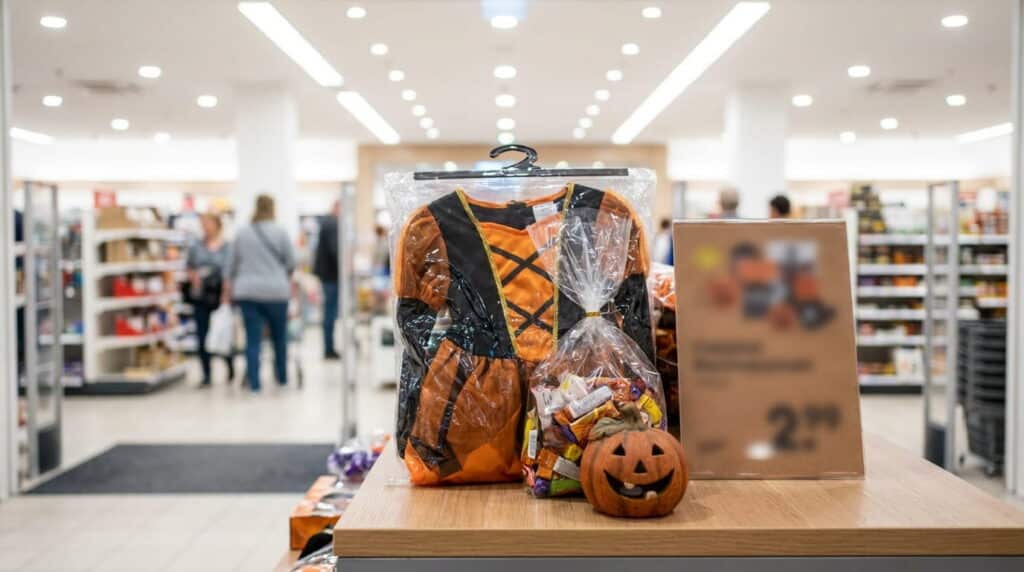
A bundle that pairs a costume with candy and a small decoration item captures spend across all three categories from a single customer, instead of hoping they come back for each one separately. Price the bundle to save the customer a little versus buying each piece alone, and make the bundle visible near the entrance, not buried on a back shelf where only browsers who already know what they want will find it.
Idea 2: Trick-or-Treat Style Reveal Promotions
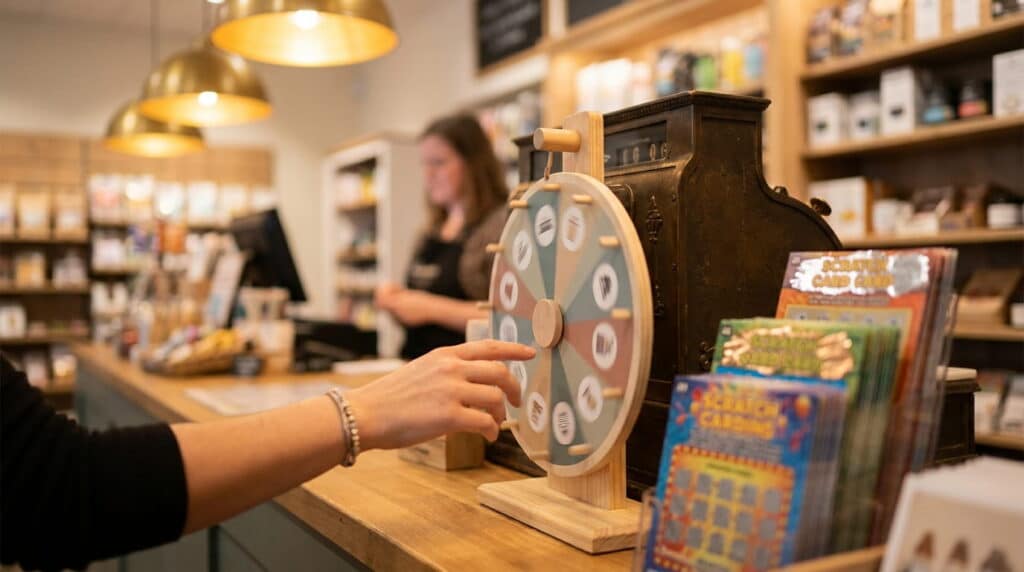
Give the checkout moment a little theater, one of the simplest Halloween promotion ideas an independent store can run without a marketing budget. A simple “trick or treat” reveal, a scratch-off card, a mystery envelope, or a spin-the-wheel at the register, hands the customer a small discount, a loyalty point bonus, or occasionally nothing at all, framed as playful rather than disappointing.
This costs almost nothing to run and works especially well for an independent retailer without a marketing budget for a full campaign. The mechanic does the work: people share a fun in-store moment more readily than they share “20% off costumes.”
Idea 3: Tailor Your Angle to Your Retail Type
Halloween doesn’t hit every retailer the same way, so don’t run the same generic push regardless of what you sell.
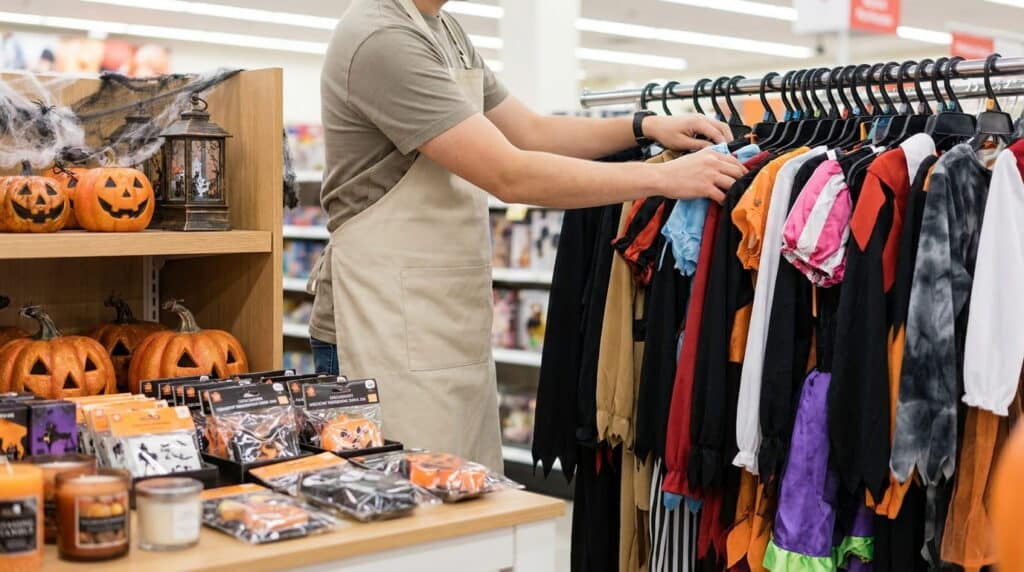
- A costume or party store should lean hard into the final-week rush. That’s genuinely your busiest window, staff for it, stock the popular sizes deeper than you think you need to, and don’t be afraid to feature the same best-sellers repeatedly in the days right before Halloween.
- A gift shop or general retailer can use decor as a gateway category. A customer who comes in for a wreath or a doormat is a customer you can also sell candy or a small seasonal gift to while they’re there.
- An apparel store has a real opening in adult costumes, a growing segment that overlaps naturally with clothing a store already carries: the right graphic tee, a themed accessory, or a costume built around pieces the store already stocks.
Idea 4: Local and Community Tie-Ins
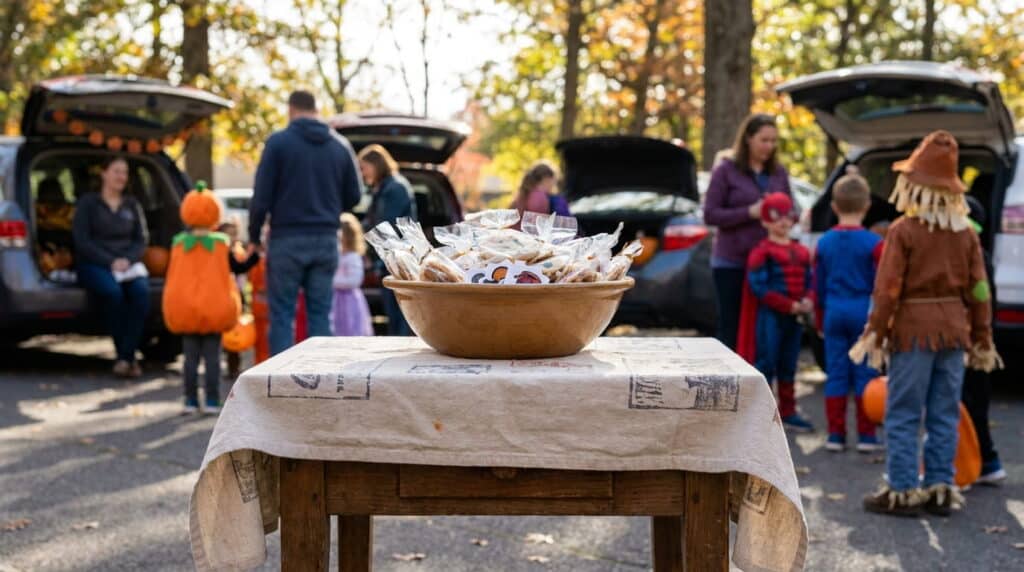
A trunk-or-treat event, a partnership with a local school’s fall festival, or simply sponsoring a community Halloween gathering puts your store in front of families who are already primed to spend.
This works for the same reason a back-to-school sponsorship does: a coupon in someone’s mailbox gets ignored, a table at the fall festival where their kid is trick-or-treating gets remembered.
Keep it simple. A small booth, a branded giveaway, or a discount code shared at the event is enough. You don’t need a large sponsorship to get the visibility.
Idea 5: Plan the Post-Halloween Clearance Now
Most retailers wait until November 1 to think about what to do with unsold decor and costumes. By then it’s too late to plan, only to react.
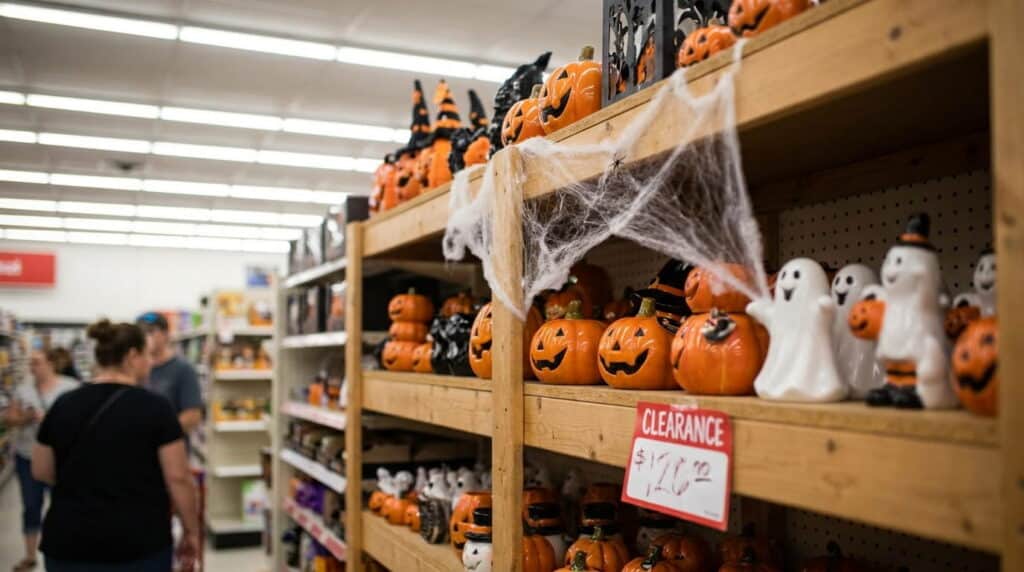
Major retailers already run a predictable two-step markdown: a smaller cut, typically 20 to 30 percent, in the week or two before Halloween itself, then a much deeper cut, 50 percent or more, starting the day after. Some go to 70 or even 90 percent off within the first week of November.
Decide your own version of that schedule now, before the holiday, not after. A modest early markdown on slow-moving decor protects some margin while it’s still relevant to the calendar. Waiting until November 1 to figure out what to do with a full shelf means you’re marking everything down at once, at the deepest discount, because you never gave yourself an earlier exit.
Keeping Checkout Fast During Halloween Week
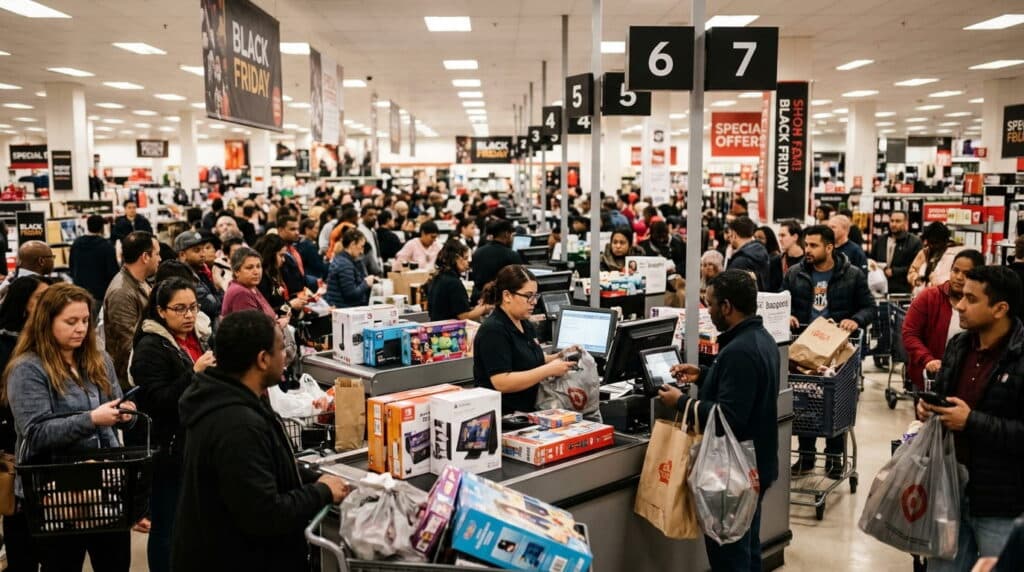
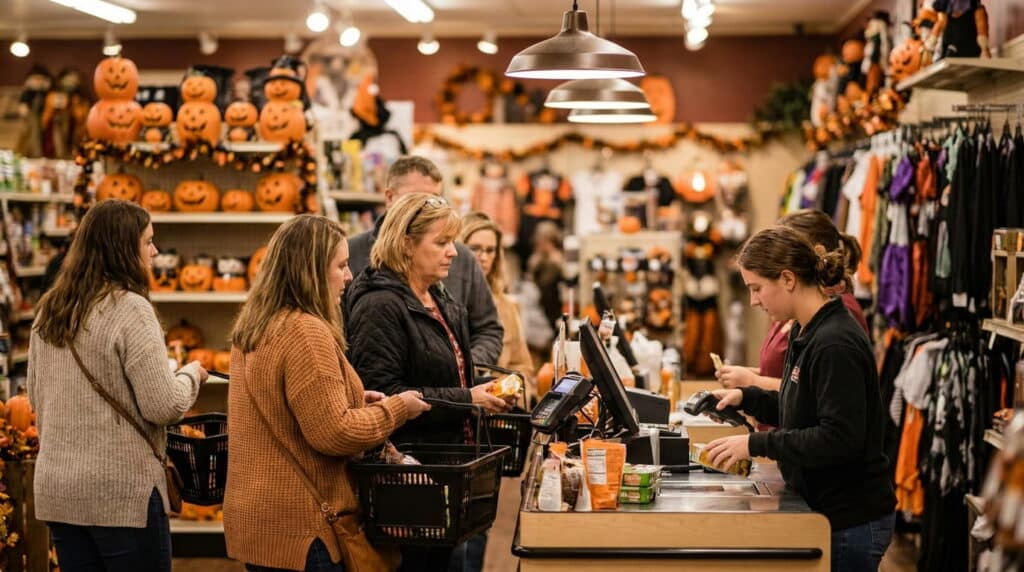
Every idea above only works if a customer can actually complete the purchase. During the single week when costume demand peaks, a slow line or an inventory system that can’t confirm stock in real time turns an interested customer into an abandoned cart, or worse, a customer standing at your register while you check the back room for a size that already sold.
A POS system built to handle a seasonal spike needs to do two things well during Halloween week specifically: show accurate stock the instant something sells, and keep checkout fast enough that a longer line doesn’t push customers to give up and leave. If you’re running bundle deals or reveal promotions like the ones above, promotions management that doesn’t require a manual price change at every register matters just as much as the promotion idea itself.
This is one of several seasonal-rush guides we’ve put together. If Halloween isn’t your only compressed selling window, our Labor Day marketing ideas post covers the same operational thinking applied to a different date on the calendar. Every one of these Halloween marketing ideas for retailers depends on the same thing underneath it: an accurate, real-time view of stock.
Frequently Asked Questions
When should retailers start Halloween marketing?
What sells most during Halloween season?
How do I avoid running out of stock before Halloween?
What should I do with leftover Halloween inventory after October 31?
Make Sure Your System Can Handle Halloween Week
Tell us how you’re tracking stock today, and get a straight answer on whether it can keep up during your busiest week.
No pressure, no obligation, just a straight answer for your setup.