
Updated: November 9, 2026
Run the wrong promotion at the wrong time, and you’ve trained customers to wait for a discount. They stop buying at full price. Pick the right one, and you move slow stock, bring back lapsed customers, or spike foot traffic on a day you need it. Most “retail promotion ideas” guides list every format with equal weight. This one doesn’t, some of these cost you margin for nothing, and a few independent retailers consistently underuse.
Key Takeaways
- Discounts are the most common promotion and the easiest to overuse. They move inventory fast, but they train customers to wait for the next sale.
- Shoppers are already fatigued by constant sales: 43% say there are too many to keep track of, and 39% say one major event is enough, according to PYMNTS Intelligence research.
- Targeted promotions built around what a specific customer already buys outperform blanket discounts without the same margin hit.
Table of Contents
- Discounts: The Most Common (and Most Risky) Promotion
- Time-Limited Sales: Flash Sales and Seasonal Events
- Loyalty and Rewards: Promotions for Repeat Customers
- Gift Cards and Giveaways: Lower-Risk Options
- In-Store Events and Coupons: Driving Foot Traffic
- Why Discount Fatigue Should Change How You Promote
- Is This Promotion Actually Profitable?
- Frequently Asked Questions
Discounts: The Most Common (and Most Risky) Promotion
A straight percentage-off or dollar-off discount is the fastest way to move inventory. It’s also the easiest way to erode what customers expect to pay going forward. Run them too often and a customer who once paid full price starts waiting for the next markdown. Buy-one-get-one deals avoid that trap because the customer still pays full price on the first item. But they work best on inventory you actually need to clear, not your best sellers.
Time-Limited Sales: Flash Sales and Seasonal Events
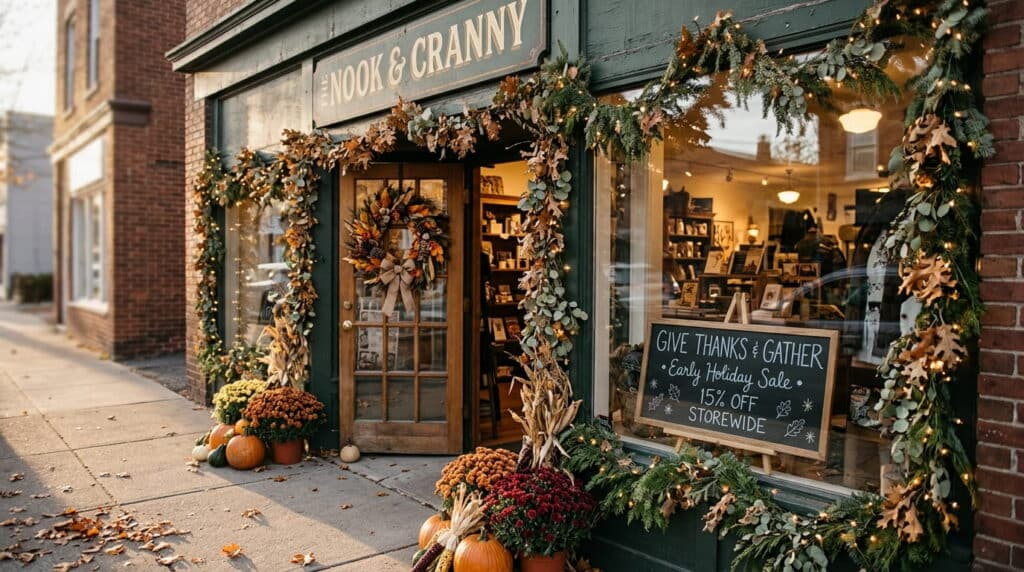
A flash sale, a few hours, sometimes a single day, creates urgency a standing discount never will. Seasonal sales tied to a real calendar moment, like back-to-school or the holiday season, work because the customer already expects them. You’re not training new behavior, you’re meeting an existing one. The mistake is running a flash sale with no real scarcity behind it. A “24-hour sale” announced the day before, then run again the following month, stops meaning anything.
Loyalty and Rewards: Promotions for Repeat Customers
A promotion aimed at existing customers costs less than one chasing new ones. It’s also where independent retailers have a real edge: big-box competitors don’t actually know their regulars. Early access to a sale, a points-based reward, or a birthday offer all work because they’re earned, not handed to anyone who walks in. If you don’t have one yet, building a loyalty rewards program is the natural starting point.
Gift Cards and Giveaways: Lower-Risk Options
Gift cards aren’t really a discount, they’re prepaid revenue. And they bring in a second customer, the recipient, who may not have found you otherwise. Giveaways, branded items at a local event or in-store, build awareness without touching your margin on actual merchandise. They’re a slower, less-measurable return than a discount or sale, though.
In-Store Events and Coupons: Driving Foot Traffic
An in-store event, a workshop, a trunk show, a seasonal demo, gives someone a reason to visit that isn’t “there’s a sale.” It’s the hardest format to measure directly. But it’s also the one a big-box competitor genuinely can’t replicate at the same personal scale. Coupons, whether mailed, emailed, or handed out in-store, work best targeted to a specific customer segment rather than blasted to everyone. That’s the same principle that makes loyalty promotions outperform blanket discounts.
Why Discount Fatigue Should Change How You Promote
Shoppers are tuning out. PYMNTS Intelligence research found 43% of shoppers say there are too many sales to keep track of, and 39% say one major sale event already covers what they need. That’s not an argument against ever running a promotion, it’s an argument against running the same blanket discount every few weeks. A targeted promotion, built around what a specific customer segment already buys, cuts through that fatigue. It doesn’t look like the sale noise everyone else is putting out.
Is This Promotion Actually Profitable?
Redemption rate tells you a promotion got used. It doesn’t tell you whether it made money. A discount that mostly reaches customers who would have bought anyway isn’t driving incremental revenue. It’s just giving away margin on sales you already had. Before running a promotion, decide what you’re actually measuring. New customers acquired. Slow stock cleared. Incremental revenue above a normal week. Not just how many people redeemed the code.
Realtime POS tracks promotion performance in real time at the register. You can see which campaign is actually moving product, instead of waiting until month-end to find out. If you want to see how that works day to day, our Promotions Management features cover BOGO offers, bundle deals, and scheduled campaigns with a set start and end date. All built into the same system you check out with.
Frequently Asked Questions
What’s the difference between a promotion and a discount?
How do I know if a promotion is actually profitable?
How often should a small retailer run promotions?
What’s the easiest promotion type to start with for a small store?
Run Promotions That Actually Pay Off
See how BOGO offers, bundles, and scheduled campaigns work inside Realtime POS, tracked in real time at the register.