
Updated: October 1, 2026
A vendor is any person or company that sells goods or services to another business or directly to a customer. A clothing wholesaler selling inventory to a boutique is a vendor. So is a freelance web developer building a store’s site, or a manufacturer shipping furniture to a retailer. Vendors sit in the middle of the supply chain, between whoever makes something and whoever ends up using it.
In retail specifically, a vendor is usually whoever’s on the other end of a purchase order, the name on the invoice when new stock comes in. Getting that relationship right affects what’s actually on your shelves and when.
Key Takeaways
- A vendor is any individual or company that sells goods or services to another business or directly to consumers, forming a key link in the supply chain.
- Vendors and suppliers are often used interchangeably, but suppliers typically provide raw materials while vendors sell finished goods or services closer to the end user.
- Effective vendor management, choosing the right partners, clear contracts, and using POS and inventory technology to automate purchase orders, directly affects cost, quality, and reliability.
Table of Contents
What Is a Vendor?
In simple terms, a vendor supplies the goods, materials, or services a business needs to operate, whether that’s a manufacturer, wholesaler, freelancer, or retailer selling directly to customers. Vendors sit within the broader business supply chain, connecting producers to the businesses and consumers who ultimately use what they sell.
For example, in retail, a vendor might supply apparel, electronics, or groceries to stores. In the service industry, a vendor could be a contractor, consultant, or maintenance provider. Essentially, vendors are the backbone of business commerce, bridging the gap between producers and end users.
Vendor vs. Supplier: What’s the Difference?
Although often used interchangeably, “vendor” and “supplier” have distinct meanings in business operations:
- Supplier: Typically provides raw materials or products to manufacturers or distributors.
- Vendor: Usually sells goods or services directly to end users or businesses for resale.
In short, all vendors are suppliers, but not all suppliers are vendors. Vendors operate closer to the end of the supply chain, interacting directly with retailers and customers.
Types of Vendors
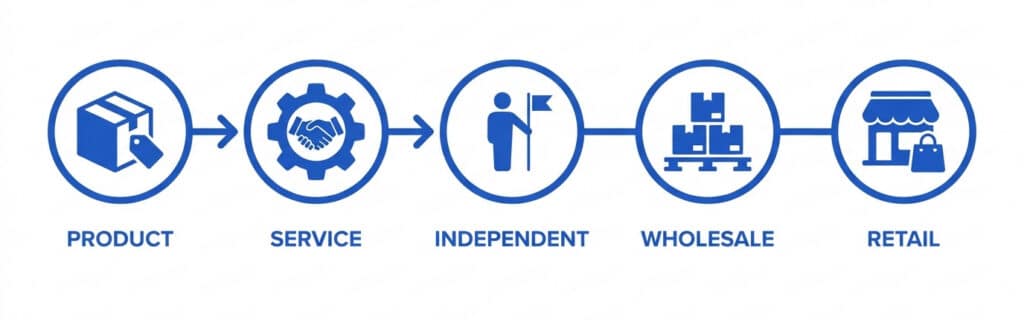
Different businesses rely on various types of vendors, depending on their needs and operations. Here are the most common categories:
1. Product Vendors
These vendors sell physical goods, such as clothing, food, electronics, or equipment, to retailers or consumers. Examples include wholesalers, manufacturers, and distributors. A hardware store ordering a shipment of tools from a distributor is working with a product vendor.
2. Service Vendors
These vendors provide professional services instead of physical products. Examples include IT providers, marketing agencies, accountants, or cleaning companies. Hire a marketing agency to run your holiday campaign, or an IT provider to keep your network running, and you’re working with a service vendor either way.
3. Independent Vendors
Also known as freelancers or independent contractors, these individuals offer specialized services or niche products without being tied to a specific organization. A freelance graphic designer building seasonal signage for one store this month and another store’s rebrand next month is a classic independent vendor, no long-term contract, just project-based work.
4. Wholesale Vendors
Wholesalers sell large quantities of goods at discounted prices to retailers or other businesses that resell products to the end consumer. A regional food distributor selling cases of packaged snacks to a grocery store, at a lower per-unit price than any single customer would pay, is a wholesale vendor.
5. Retail Vendors
These vendors sell directly to the final customer, either in physical stores or through eCommerce platforms. Sell finished goods straight to the person who’s going to use them, whether that’s in a storefront or through an online shop, and you’re a retail vendor yourself.
The Role of Vendors in Business
A good vendor does more than just ship product. They’re the reason your shelves stay stocked instead of empty, the reason a defective batch gets caught before it reaches a customer, and often the reason you’re not paying more than you have to. A few things that actually ride on the vendor relationship:
- Keeping product flowing: a vendor who delivers on time is the difference between a fully stocked shelf and a customer walking out empty-handed.
- Catching quality problems early: a vendor who stands behind their product protects your reputation before a bad batch ever reaches a customer.
- Controlling cost: negotiating well with a vendor shows up directly in your margin, not just in the invoice total.
- Staying current: vendors who bring you new products or better terms as the market shifts are worth more than ones who just fill the same order every time.
In the stores we’ve worked with, the vendor relationship that quietly costs the most isn’t the unreliable one, it’s the mediocre-but-tolerable one nobody ever gets around to replacing.
Vendor Management: Why It Matters
Vendor management is just the ongoing work of picking the right vendors and keeping those relationships actually working, not a one-time decision you make and forget. It comes down to a few real pieces:
Key components of vendor management include:
1. Vendor Selection
Choosing the right vendor involves assessing quality, price, reliability, and reputation. A poor vendor choice can lead to delays, substandard products, and financial loss, problems that usually surface first during receiving.
2. Contract Negotiation
A contract that spells out pricing, delivery windows, payment terms, and what happens if something goes wrong protects you before there’s a dispute, not during one.
3. Performance Monitoring
Check delivery times, product quality, and how a vendor actually responds when something goes wrong, not just how they pitch themselves at the start. A vendor who’s great on the sales call and slow on a return request is still a slow vendor.
4. Risk Management
A single vendor going down, a supply disruption, a recall, shouldn’t be able to take your whole operation down with it. Having a backup option isn’t paranoia, it’s the difference between a bad week and a bad quarter.
5. Relationship Building
Vendors who know you’re a reliable, easy-to-work-with customer are the ones who call you first when they’ve got limited stock or a better deal, not the vendor relationship you only think about when something’s wrong.
Benefits of Working with Reliable Partners
A vendor you can actually count on changes how your business runs day to day:
- Less administrative drag: fewer fires to put out means less time spent chasing down orders instead of running the business.
- Real cost savings: consistent, competitive pricing adds up over a year in a way a one-time discount never does.
- Consistent product: customers notice when quality is inconsistent, and a reliable vendor is how you avoid that conversation.
- Orders that actually arrive on time: demand doesn’t wait, and neither should your restock.
- Room to grow: a vendor who can scale with you means you’re not re-negotiating everything the moment business picks up.
Challenges in Vendor Relationships
Vendor relationships matter enough to businesses that it’s worth naming what actually goes wrong, proactively, not after it’s already a problem:
- Communication gaps: a missed detail on one end turns into a wrong order or a blown deadline on the other.
- Quality that slips: one bad shipment is a customer complaint, several are a reputation problem.
- Putting all your stock in one vendor’s hands: a single supplier going down shouldn’t be able to take your inventory with it.
- Payment friction: paying late or inconsistently is one of the fastest ways to end up at the back of a vendor’s priority list.
How Technology Improves Vendor Management
Modern technology, including Point-of-Sale (POS) and inventory management systems, helps streamline vendor management. These systems automate purchase orders, track inventory levels, and analyze vendor performance, allowing businesses to make data-driven decisions.
Integration between accounting, procurement, and POS software enhances transparency, reduces manual errors, and improves operational efficiency, ensuring smooth coordination between vendors and business operations.
Frequently Asked Questions
What is a vendor?
What’s the difference between a vendor and a supplier?
What are the different types of vendors?
What does a vendor do in a business?
How can technology improve vendor management?
How do vendors work?
Conclusion
A vendor is more than a line on a purchase order, they’re a real partner in whether your business runs smoothly or constantly firefights. Knowing the different types of vendors, how to manage them, and where the real risks sit isn’t academic, it shows up directly in your margins and your shelves.
Strong vendor relationships, clear contracts, and the right technology behind them are what keep supply consistent and customers satisfied as the market shifts around you.
Stop Chasing Vendors and Purchase Orders by Hand
See how Realtime POS automates purchase orders, tracks vendor performance, and keeps inventory data in sync, all in one system.
See exactly how Purchase Orders works, no pressure, no obligation.