
A customer wants a size 10. You’re out. She isn’t going to buy the size 9 sitting next to it. That’s the whole problem with footwear inventory, and it’s why knowing when to markdown a shoe size can’t wait for the whole style to look slow: one size can already be dead weight on the shelf while the rest of the run still sells just fine.
Key Takeaways
- A broken size run isn’t the same as being out of stock, and it kills sales even while the style’s overall numbers still look healthy.
- Three triggers tell you a size needs a markdown: how many pairs are left, how it’s selling against its own size curve, and how many weeks of stock remain versus the season.
- A staged markdown, a smaller cut first, a deeper one if it doesn’t move, protects more margin than waiting and then discounting hard.
- Catching this early depends on seeing stock at the size level, not just the style level.
Table of Contents
What Counts as a Broken Size Run?
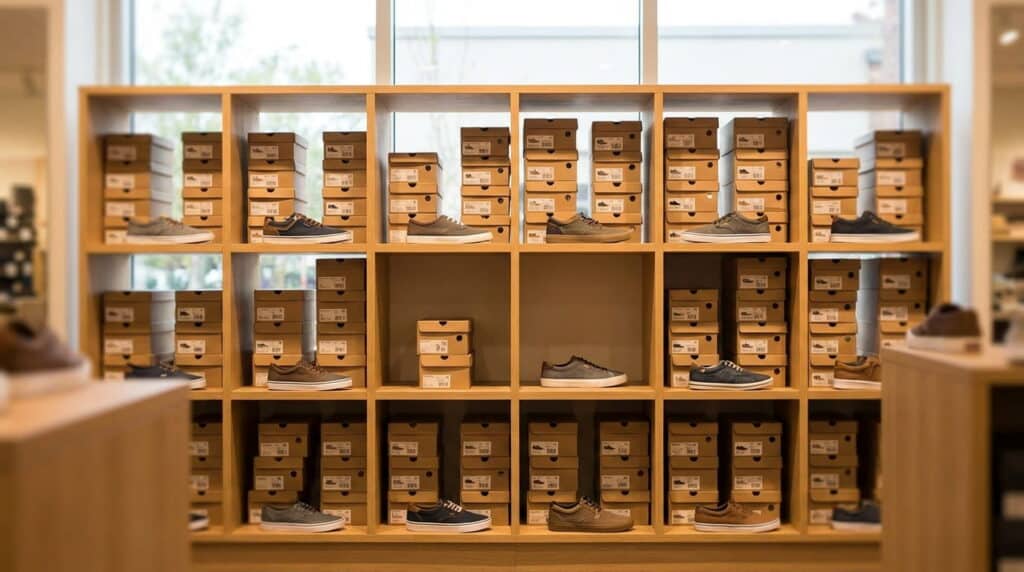
A broken size run is a style where some sizes have sold out and others haven’t, not a style that’s out of stock entirely. The distinction matters because a shoe customer who wants a missing size will not buy a different one, unlike a shopper who might grab a different color shirt in their size.
That’s what makes a broken size run dangerous. Your stock report shows pairs sitting on the shelf, so nothing looks urgent. But if those pairs are all a size 7 and 12, and every customer who walks in wears an 8, 9, or 10, you’re effectively out of stock for the only sizes anyone actually wants.
Why Style-Level Numbers Hide a Broken Size
Picture a style that comes in six sizes. Four of them sold through at a healthy pace. Two are sitting untouched. Look at the style’s overall sell-through and it still reads fine, maybe 65 to 70 percent sold, nothing that jumps out on a weekly report.
But those two dead sizes aren’t going to move on their own, and they’re not going to average out. Most markdown advice is written for the whole SKU: mark down the style when its total sell-through lags. That works for a plain t-shirt, where a customer will grab any size close enough. It doesn’t work here, because the decision that actually matters is happening two sizes at a time, hidden inside a number that still looks acceptable.
The Three Triggers That Tell You It’s Time
None of these three needs the other two to agree. Any one of them firing on its own is reason enough to act on that specific size.
Trigger 1: Size Count Remaining
The simplest rule doesn’t need a spreadsheet. When a color or style is down to one or two pairs in a given size, that size has effectively stopped being a real selling proposition, it’s a matter of when, not if, the last pair goes and the size disappears from the shelf. Treat that count as your first, no-analytics-required trigger. Adjust the exact number to your own volume: a high-traffic store might set the line at three pairs instead of one.
Trigger 2: Sell-Through Rate Against Its Own Size Curve
Every style has an expected size curve, the rough share of sales each size should carry based on your customer base. A size 9 and 10 usually carry more of the volume than a size 6 or a 13. Track sell-through by size against that curve, not against the style average.
If a size is sitting 10 or more percentage points behind where it should be by week six of the selling period, that’s your signal. For example: a style expected to have moved 50 percent of its size 8s by week six has only moved 35 percent. That’s not “give it more time,” that’s a trigger.
Trigger 3: Weeks of Supply Versus Remaining Season
Divide what’s left in that size by its recent weekly sell rate, and you get weeks of supply. If that number is longer than the weeks actually left in the selling season, the math already tells you those pairs aren’t selling out at full price, regardless of how many are left or how the rest of the style is doing.
The Staged Markdown Table: How Deep, How Fast
A single flat discount wastes margin on sizes that would have sold with a small nudge, and undersells the ones that need a real push. Stage it instead. This is one workable model, adapt the percentages and pair counts to your own store rather than copying them as a fixed rule.
| Stage | Trigger | Typical Markdown | Where It Sells |
|---|---|---|---|
| Stage 1 | 1-2 sizes remain in that color/style, or sell-through lags its curve by 10+ points at week 6 | 15-20% | Main floor, same shelf |
| Stage 2 | No improvement within 2 weeks of Stage 1, or weeks of supply exceeds remaining season | 30-40% | Main floor, clearly marked clearance section |
| Exit | Still not moving after Stage 2 | 50%+ or routed out | Outlet channel, online clearance, or a final blowout |
Catching Stage 1 the week it happens, not a month later during the next full count, is the difference between a 15 to 20 percent markdown protecting most of your margin and a 50 percent fire sale being the only option left. That’s not a pricing strategy problem at that point, it’s an inventory visibility problem that happened weeks earlier.
Markdown vs. Clearance: Different Tools, Different Endpoints
These two get used interchangeably, and they shouldn’t be. A markdown is a price step down on an item still selling in your normal channel, on the regular shelf, at a discount. Clearance is the exit: the item has already had its markdown chances and is moving to a designated clearance section, an outlet, or an online blowout because the smaller discounts didn’t clear it.
Treat a markdown as a question, will a smaller discount move this. Treat clearance as an answer: no, and it’s time to get it off the books.
Catching It Before It Becomes Dead Stock
A footwear markdown strategy built on these three triggers only works if you can see stock at the size level in real time. A style-level count that says “12 pairs left” tells you nothing about which sizes those are. In our experience working with independent and multi-store retailers over more than 50 years combined, the single most common reason a broken size run turns into dead stock isn’t a bad markdown decision, it’s not noticing the size was broken until the next physical count, weeks after Trigger 1 would have already fired.
A POS system built for footwear that tracks inventory down to size and color, not just style, is what makes Trigger 1 something you catch the day it happens instead of the month you happen to do a recount. Miss that window consistently and you’re not managing broken sizes anymore, you’re managing dead stock.
Frequently Asked Questions
What’s the difference between a broken size run and being out of stock?
How do I know if a shoe size is slow-moving or just early in its season?
Should I markdown one size or the whole style?
What’s the difference between a markdown and a clearance sale?
See Every Size, Not Just the Style Total
Tell us how you track sizes today, and get a straight answer on what a real-time, size-level view would catch that you’re missing now.
No pressure, no obligation, just a straight answer for your setup.